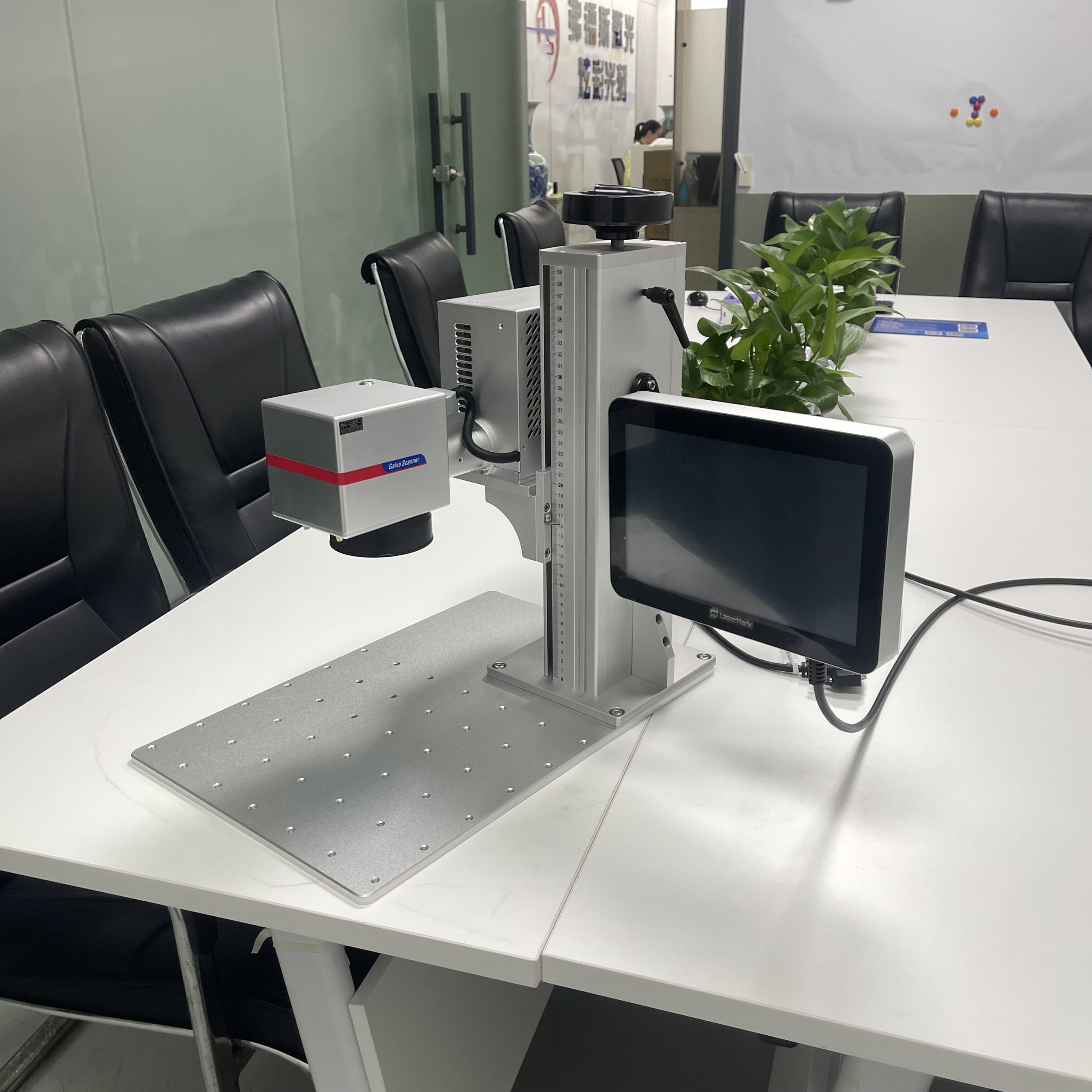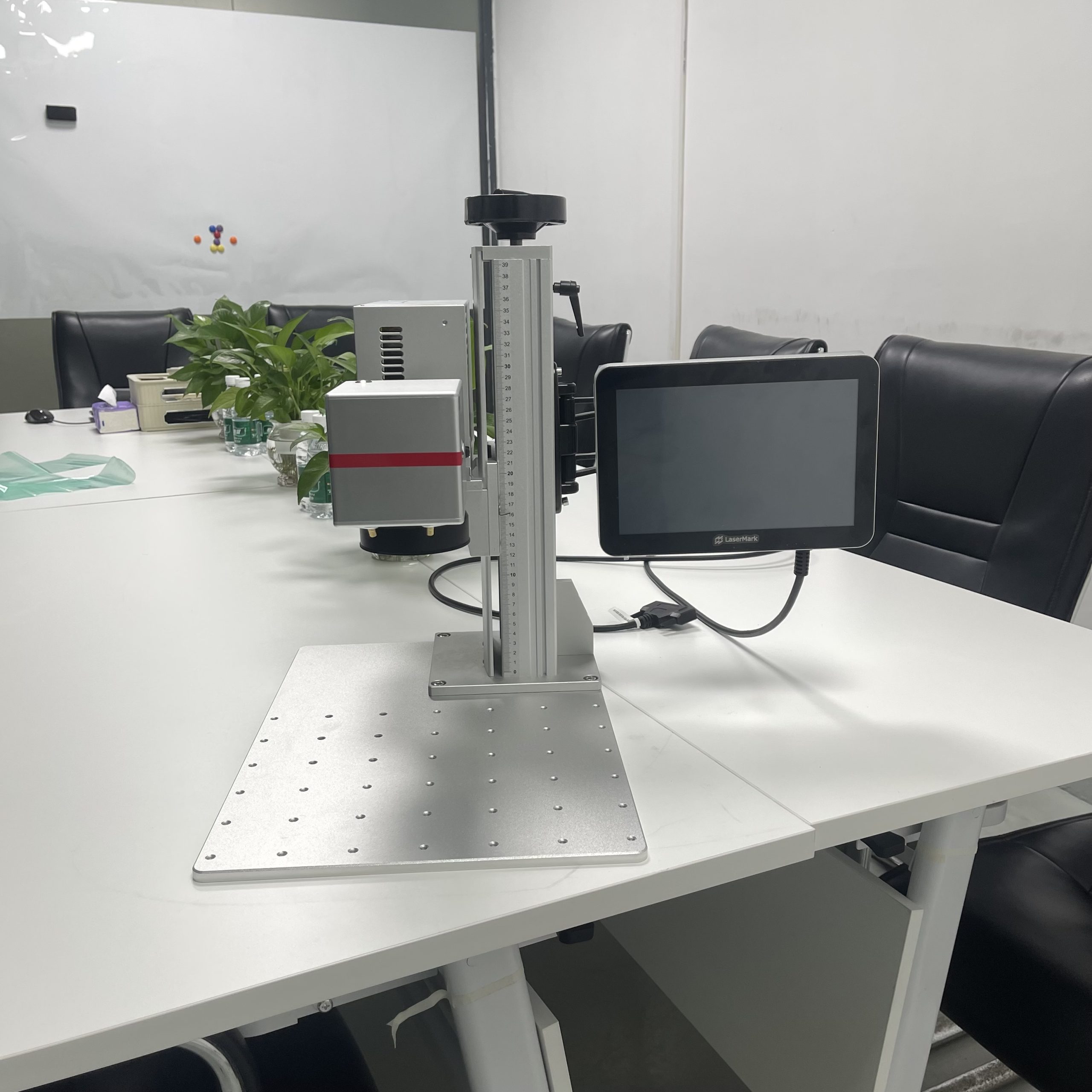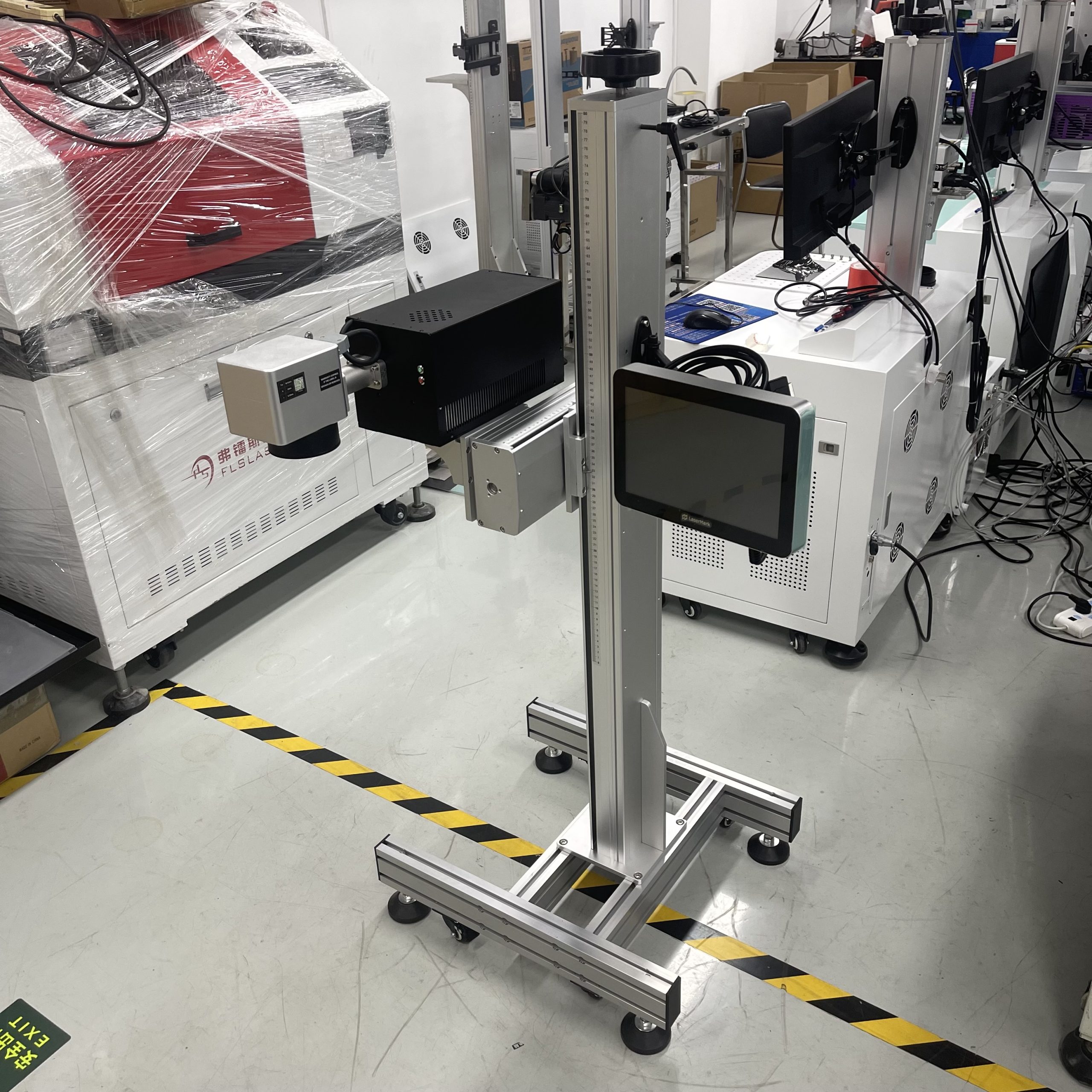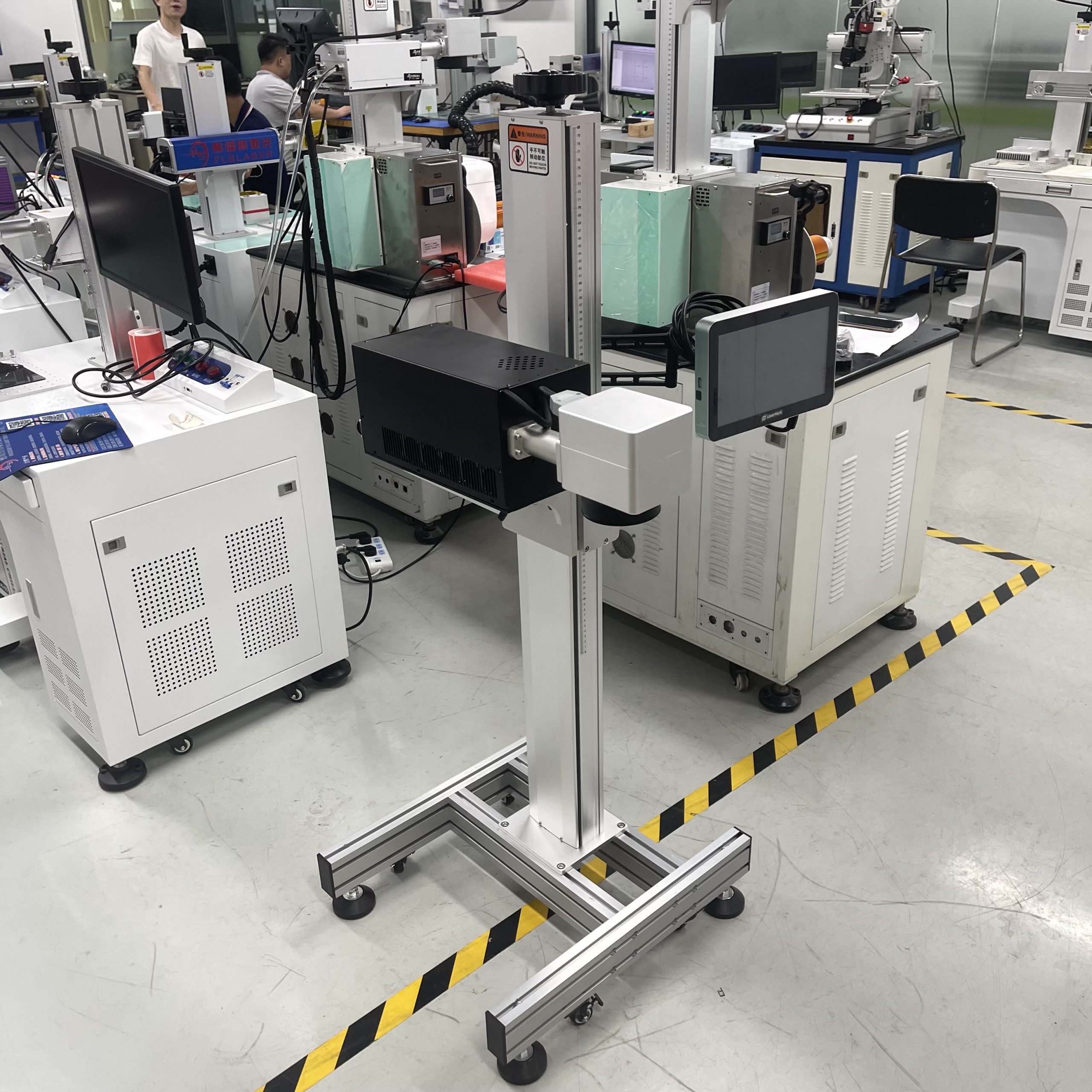
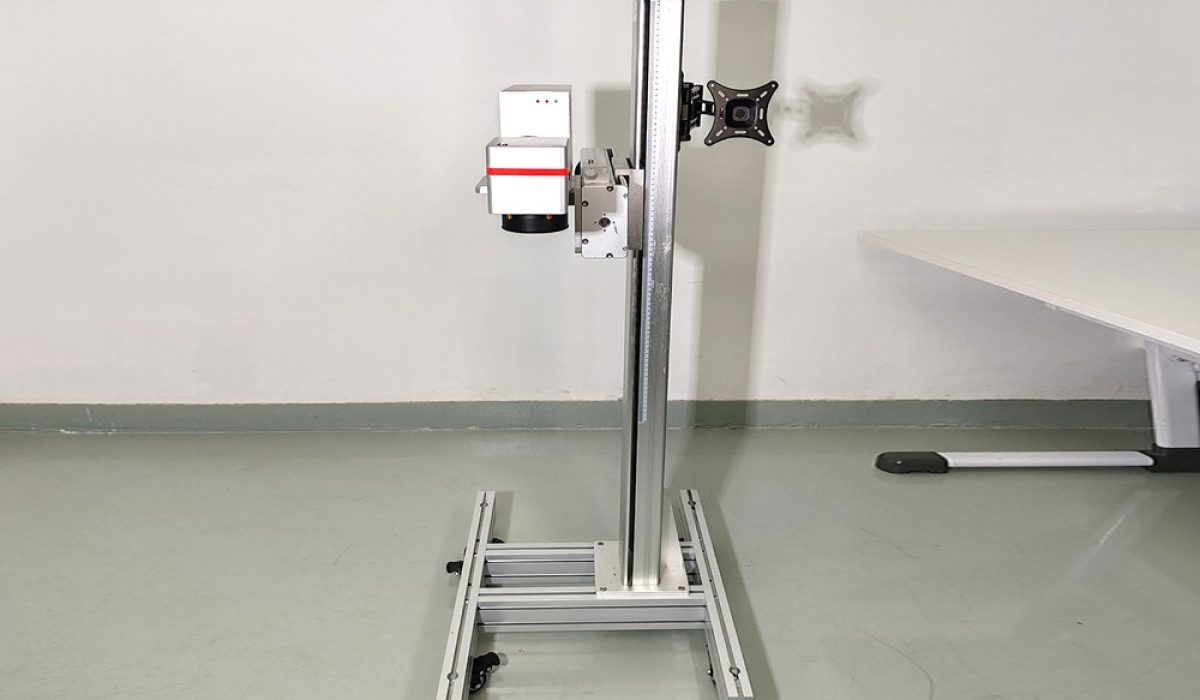
When parts move, you do not stop the line — you mark “on the fly”. Flying fiber laser marking (also called inline or on-the-fly marking) integrates a laser head with your conveyor so every part is marked automatically, at speed, without manual handling.
What “Flying” Marking Means
The laser fires while the part is still moving. A sensor tells the system when a part has arrived, and an encoder tells it how fast that part is travelling, so the mark is drawn accurately despite the motion.
How the Integration Works
- Trigger sensor — a photoelectric eye detects the leading edge of each part.
- Encoder or PLC — sends speed and position data to the laser controller.
- Galvo compensation — the scanner adjusts its path so the mark stays square and readable.
- Verification (optional) — a vision camera reads each mark back for traceability.
Marking Speed and Throughput
The laser itself needs only microseconds per mark, so throughput is normally limited by handling, not by marking. Line speeds of roughly 10–60 m/min are achievable depending on mark content and surface. The key constraint is usually a consistent, fairly flat surface facing the marking head.
When Inline Marking Pays Off
- High-volume, 24/7 production where manual handling is the bottleneck.
- Traceability and UDI requirements that demand a mark on every part.
- Environments where stopping the line or handling parts by hand is unsafe or expensive.
FAQ
Does it work on any orientation? Usually the part needs a consistent, mostly flat surface facing the head. Complex geometry may need a fixture or a different marking method.
Can marks be verified automatically? Yes — vision verification is a common add-on for regulated industries.
Compare the alternatives before you decide: the complete fiber laser marking guide, handheld markers for field work, or discuss an inline setup with FLS.