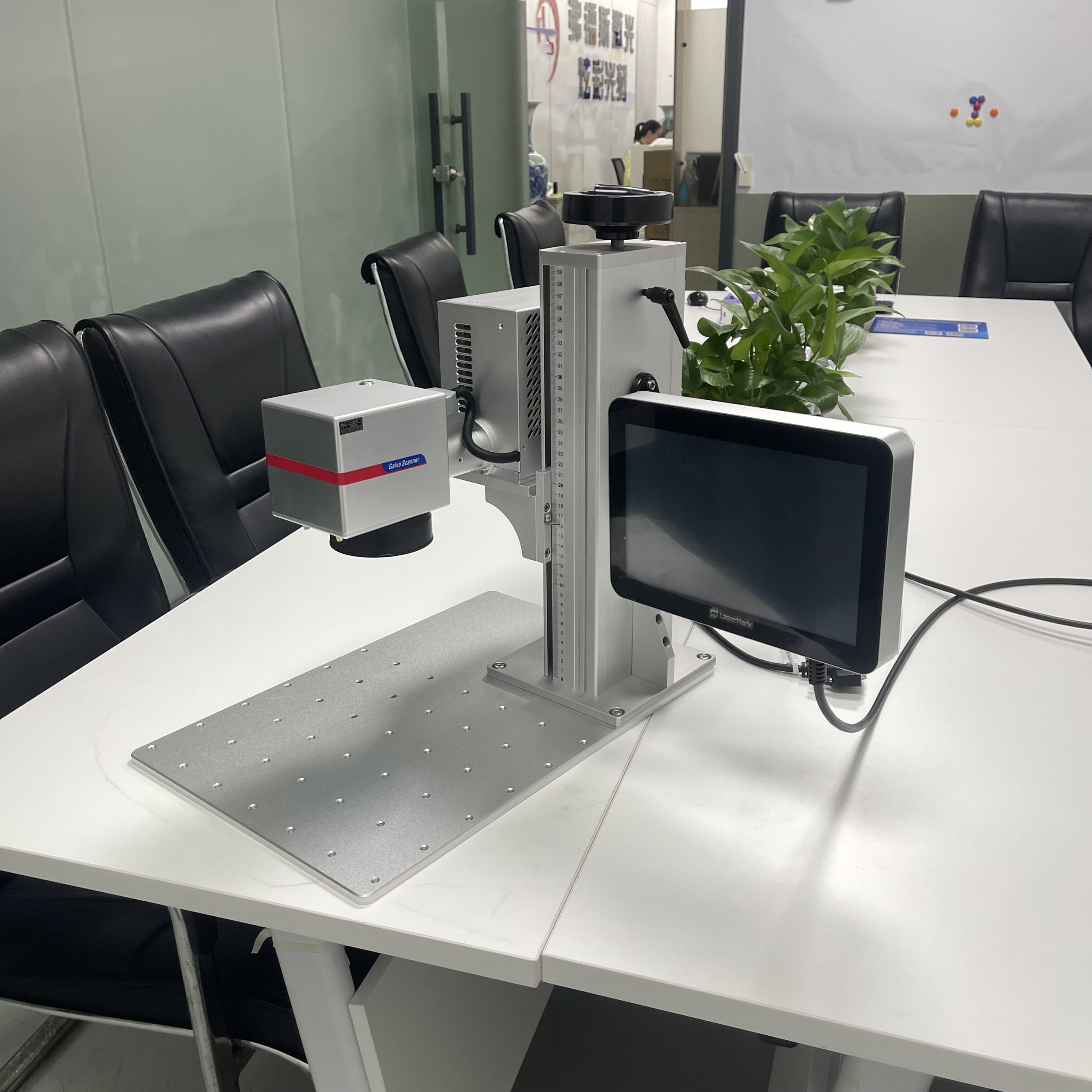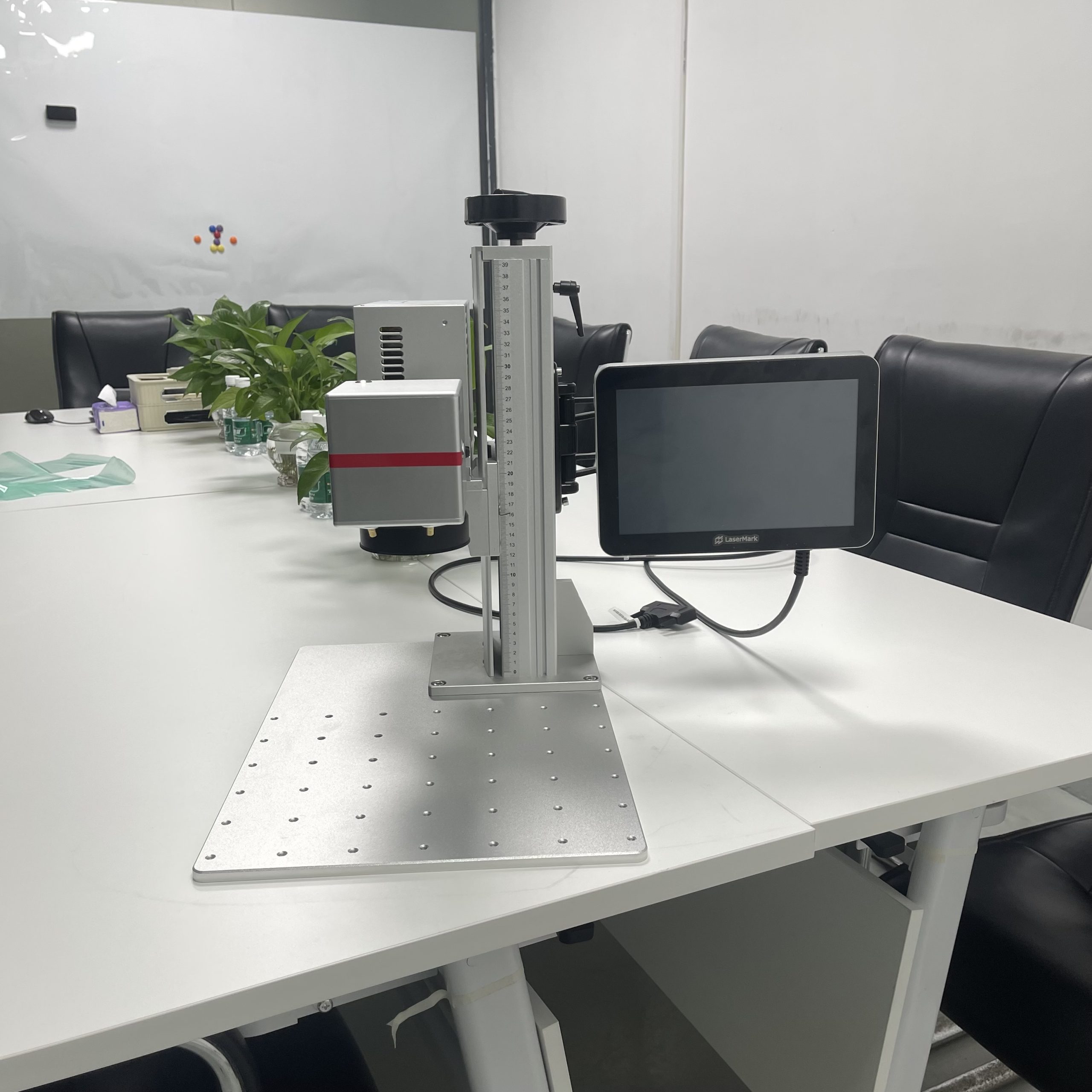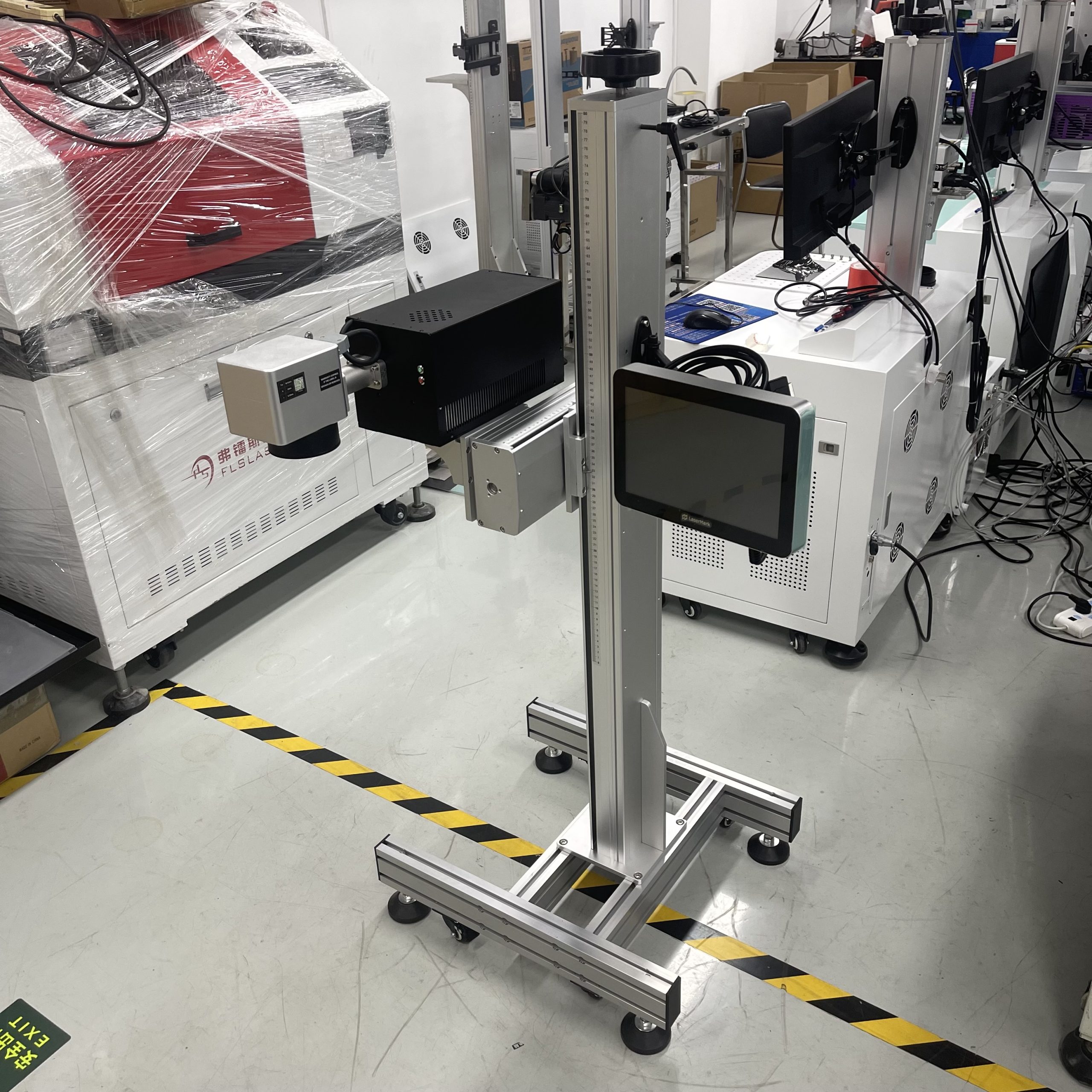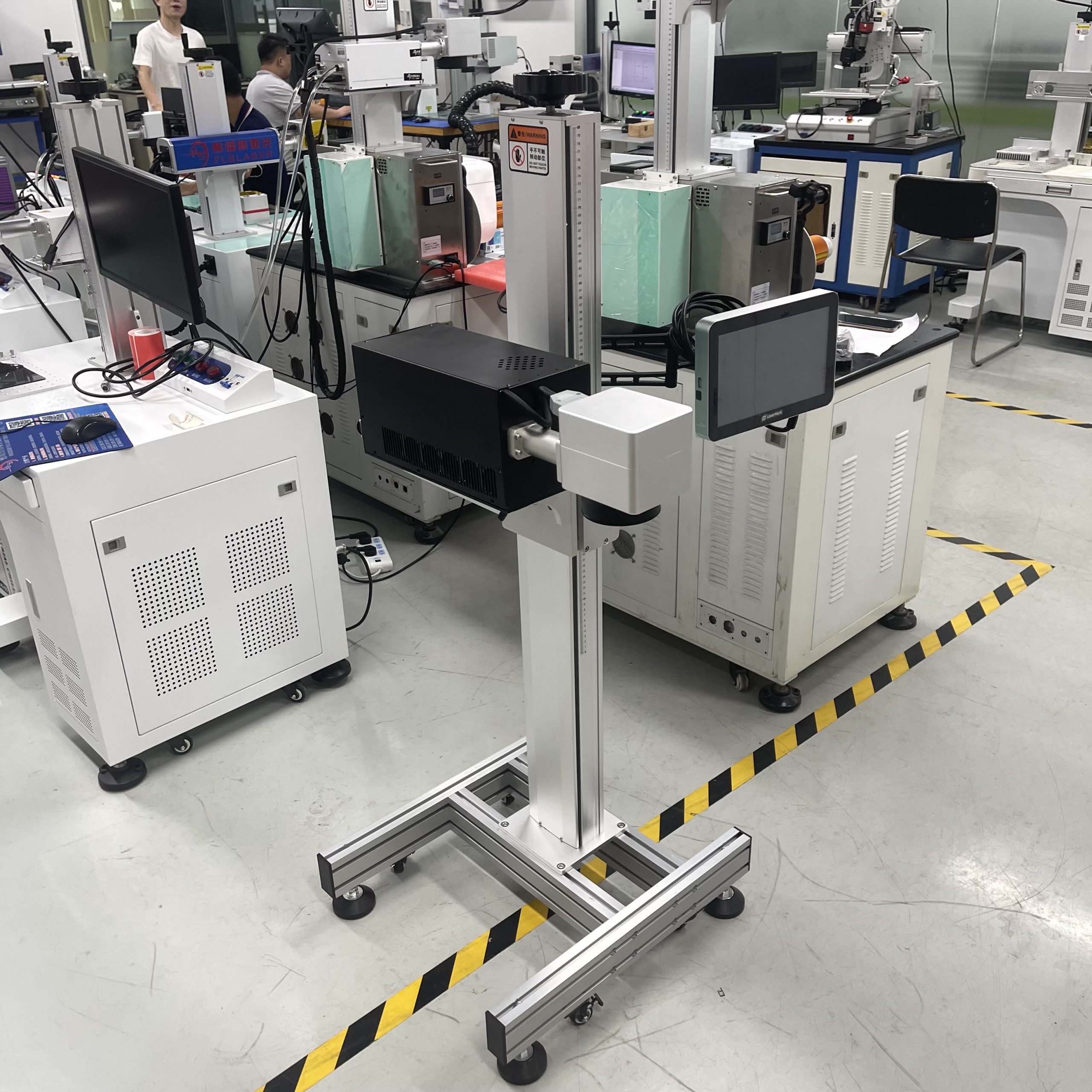
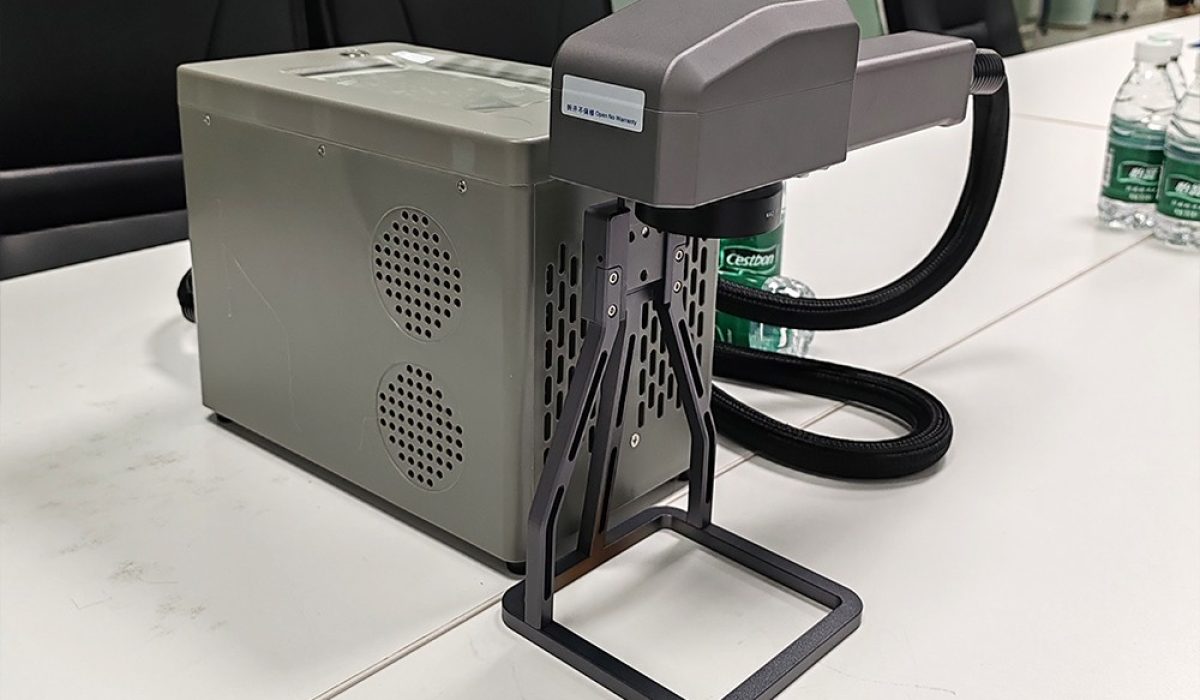
A handheld fiber laser marking machine puts the same 1064nm beam as a benchtop unit into a gun you can point at a part. It is not the right tool for every job — but for the right jobs it removes the need to move the workpiece at all, which is often the slowest and most awkward part of the process.
What Is a Handheld Fiber Laser Marker?
It is a fiber laser source, a galvo head and a power supply or battery packaged as a portable unit, usually between 20W and 100W. A flexible cable or umbilical runs to the marking head; you aim the head, and the software fires the mark — often triggered by a button or foot pedal.
When a Handheld Beats a Benchtop Machine
- Large or immovable parts: chassis, pipe, I-beams, installed equipment.
- Marks in awkward, hard-to-reach positions.
- Field service and on-site marking where the part cannot come to the workshop.
- Low-volume, varied work where fixtures are not worth building.
Weight, Power and Cable Options
Portable units typically weigh 15–35kg depending on power; many ship with a backpack, trolley or shoulder harness. Higher power means faster and deeper marks, but also more weight and more heat to manage. For most field marking, 20W–50W is the practical sweet spot.
Limitations to Know Before You Buy
- Consistency is more operator-dependent than a fixed benchtop setup.
- Safety: this is a Class 4 open-beam tool — eyewear and a controlled area are mandatory.
- Not ideal for high-volume, highly repeatable production; that is where flying or inline marking wins.
FAQ
Can it mark curved surfaces? Yes, at the correct focal distance, though deep curves need practice and a steady hand.
Is it as powerful as a benchtop machine? The source power can be identical, but handheld use limits achievable speed and precision.
Not sure whether you need a portable or a fixed system? Start with the complete fiber laser marking machine guide, compare 2026 prices, or tell us your part and we will recommend a configuration.
Signature:FLS – Laser Applications Engineer