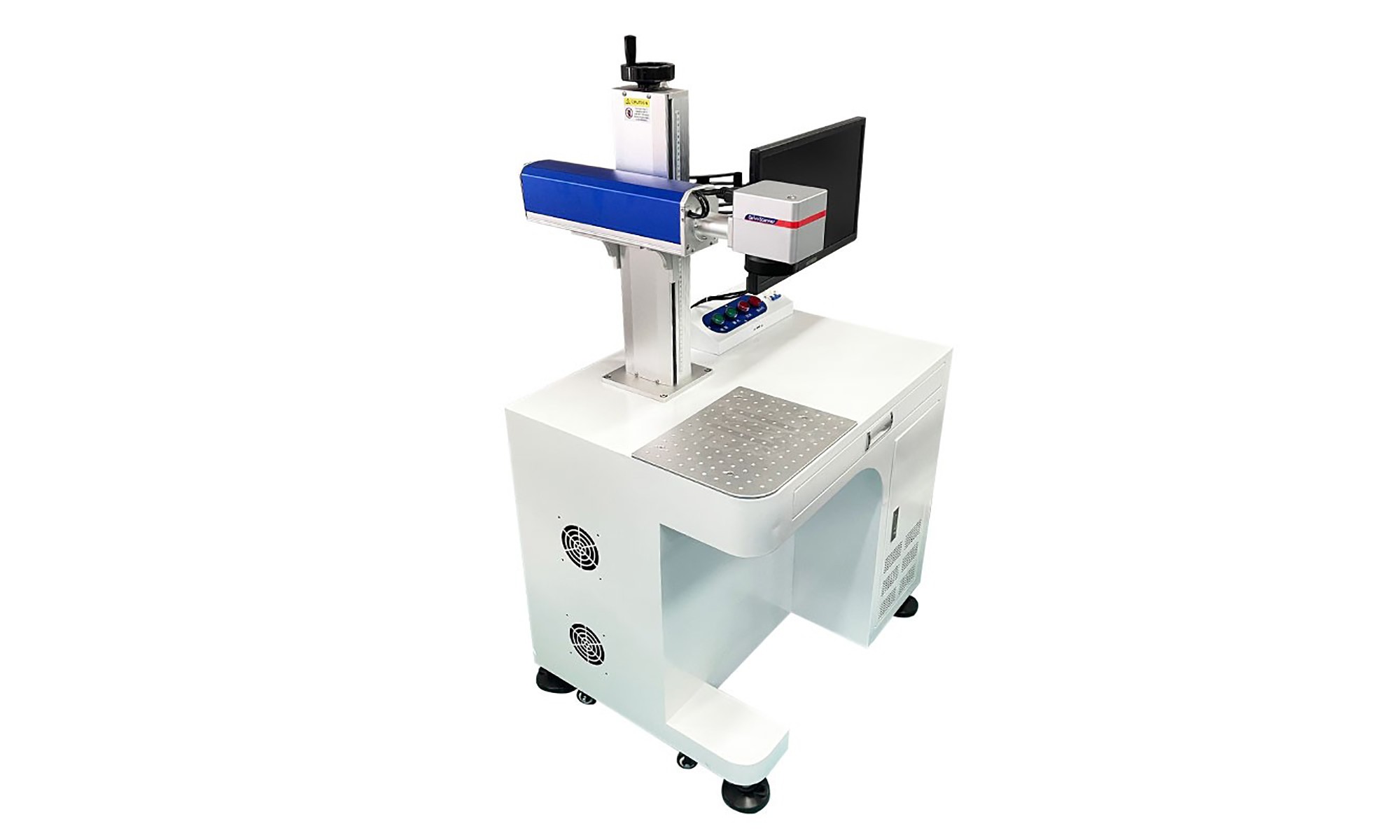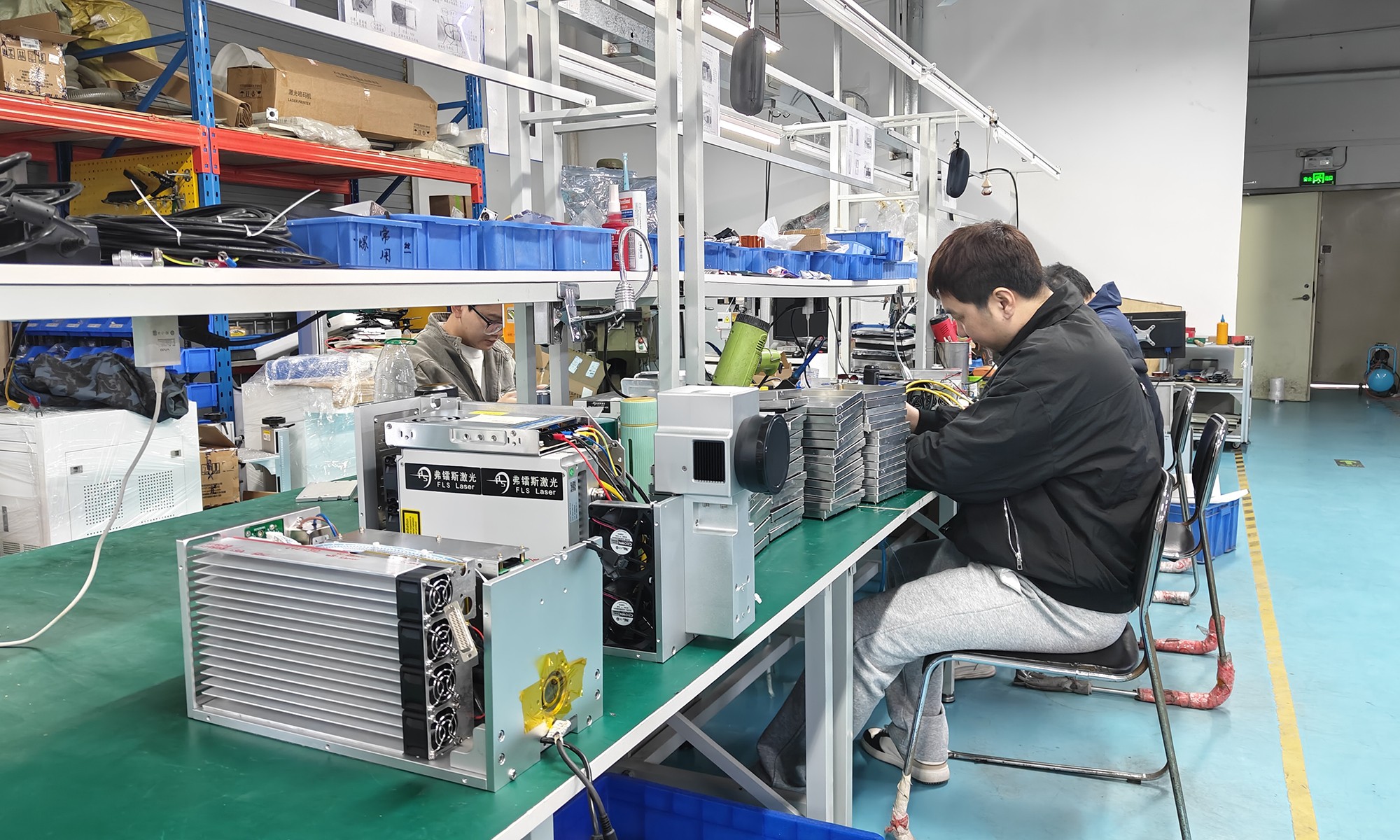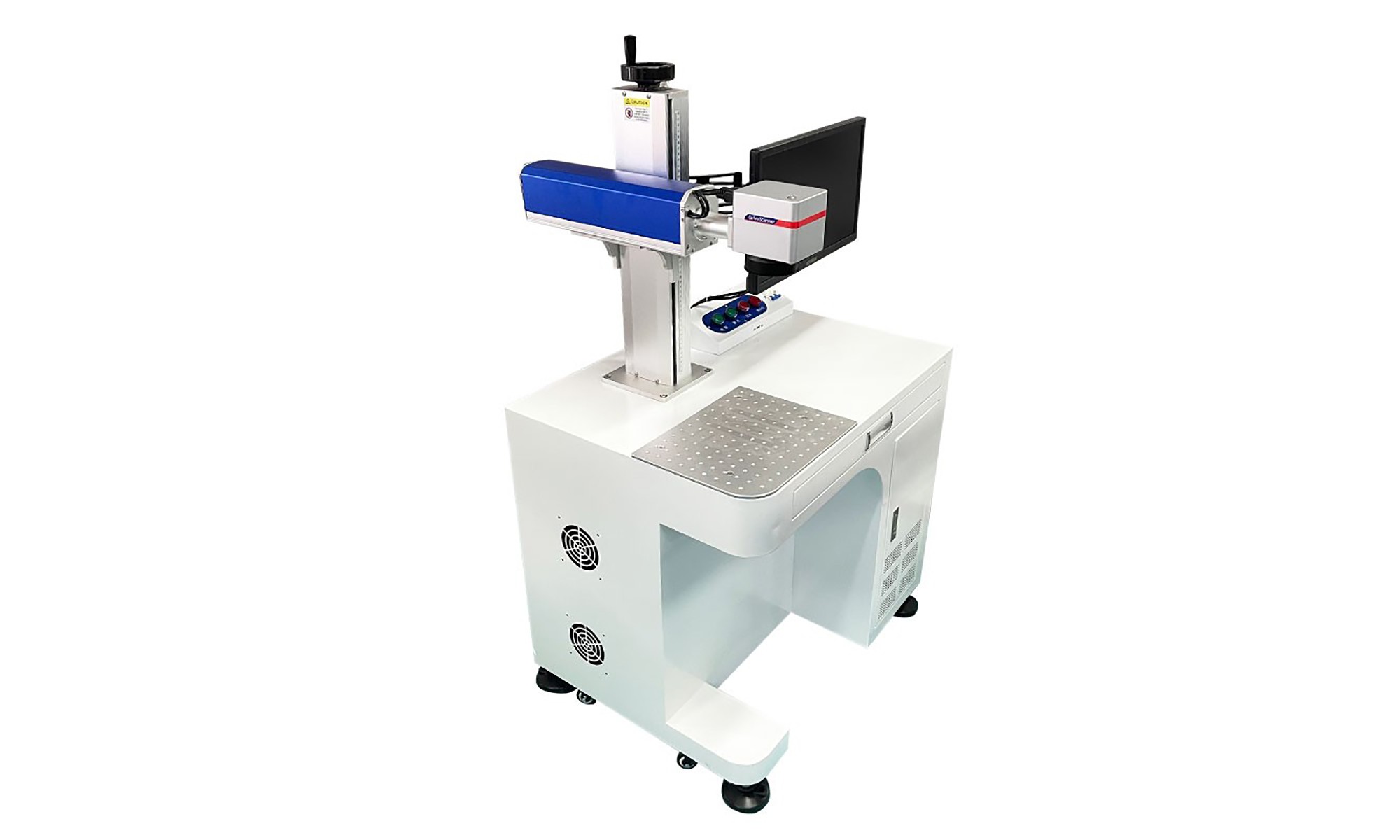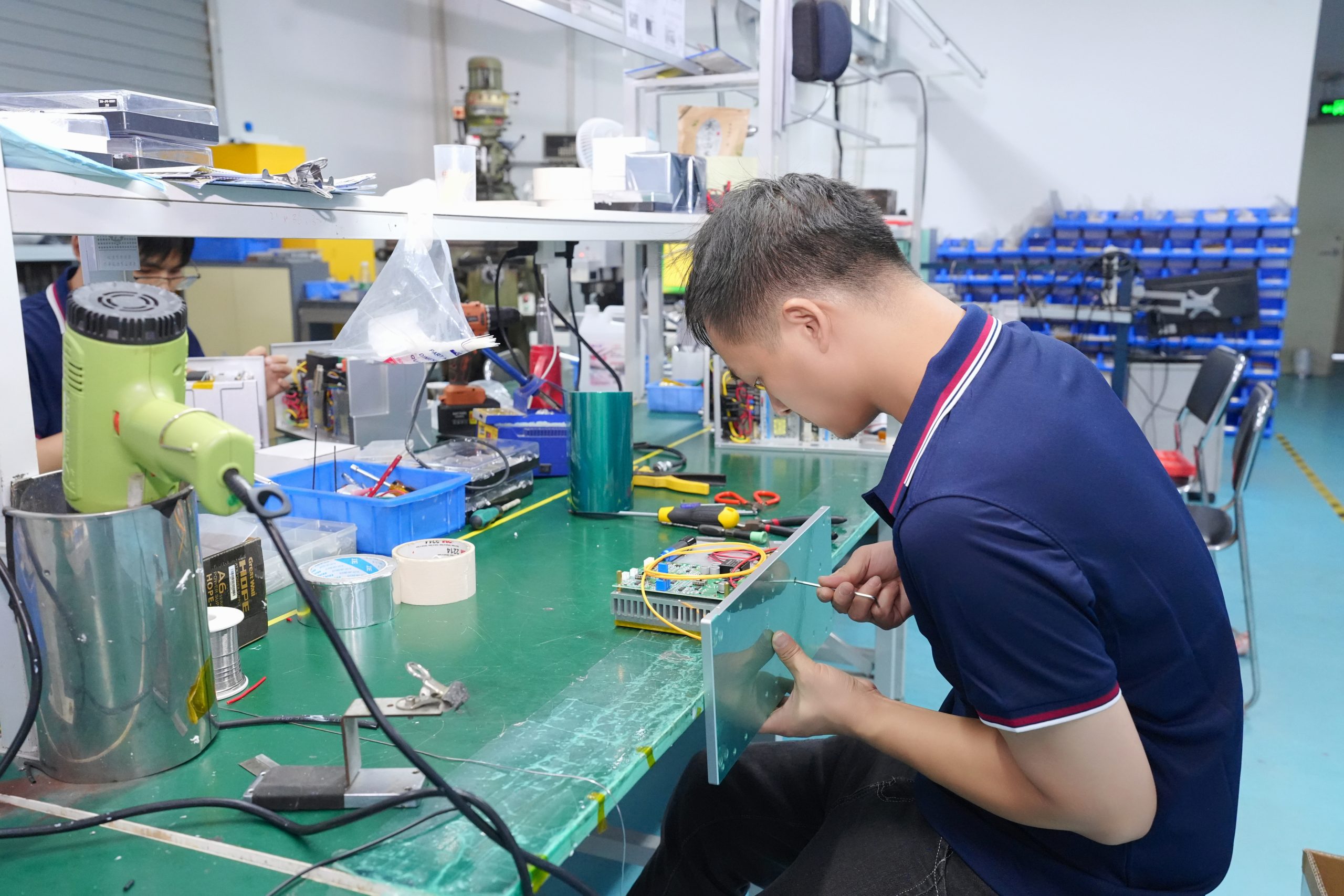
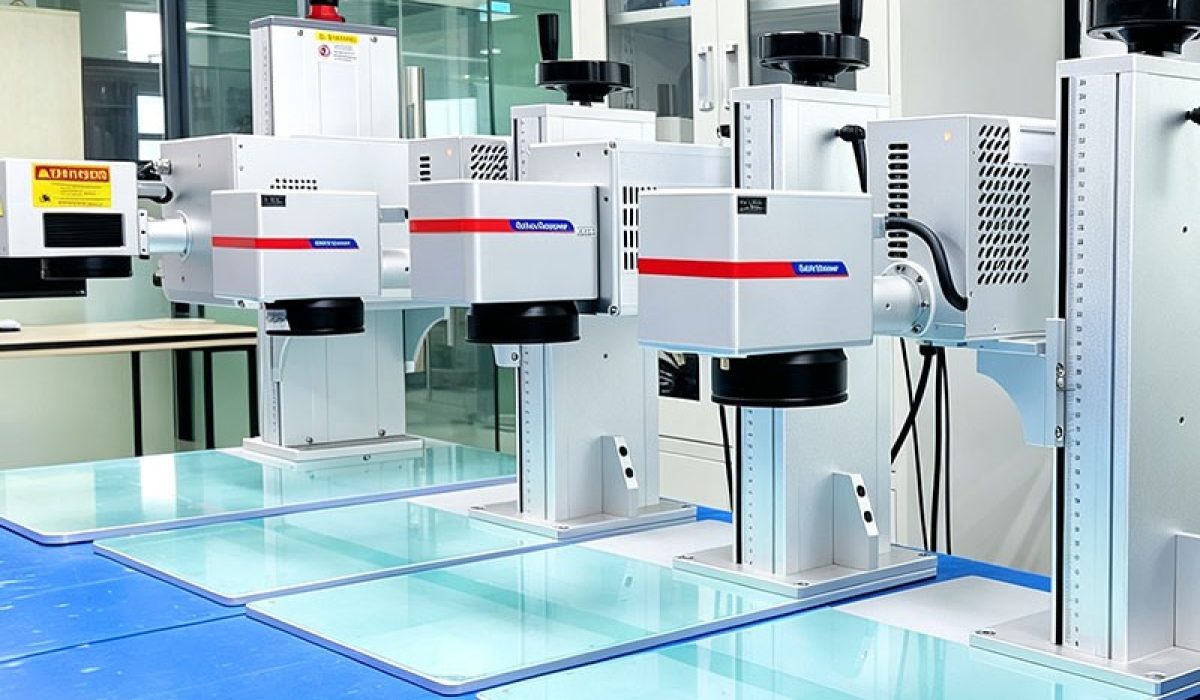
If you are specifying your first marking system, the question that matters most is a simple one: how does a fiber laser marking machine work — and what does that mean for the parts in front of you? The short answer is that a fiber laser does not print, cut or scratch anything. It focuses a beam of light at 1064 nanometres onto the surface, and that energy permanently changes the material itself. Power, lenses and software only shape that one idea.
What Makes a “Fiber” Laser Different?
A fiber laser uses a strand of ytterbium-doped optical fiber as its gain medium. Pump diodes excite the fiber, the fiber amplifies the light, and the output is a clean 1064nm beam. Compare that with the two other marking technologies you will meet on the same shop floor:
- CO₂ laser — 10,600nm, absorbed by organics such as wood, acrylic and glass, but weak on bare metal.
- UV laser — 355nm “cold” marking that suits heat-sensitive plastics, glass and PCB substrates.
At 1064nm, metals absorb energy efficiently, which is exactly why fiber lasers dominate metal marking.
Inside the Machine: The Six Core Components
- Fiber laser source — generates the 1064nm beam (20W–100W is the common range).
- Galvo scanner — two fast mirrors that steer the beam to draw the mark.
- F-theta lens — flattens the focus across a marking field such as 110×110mm.
- Control board & software — turns your artwork (DXF, AI, BMP) into scanner paths.
- Cooling — air-cooled on most low-power units, water-cooled at higher power.
- Power supply & cabinet — plus optional rotary axis or conveyor integration.
The Three Ways a Fiber Laser Marks Metal
Depending on power and pulse settings, the same machine produces three very different results:
- Annealing — heat oxides the surface for a black mark on stainless steel with no material removal.
- Engraving / ablation — material is vaporised for a deep, tactile mark.
- Foaming / colouring — a MOPA source forms surface structures that read as colour or high-contrast white.
For the differences between the two source types, see MOPA vs Q-switched fiber lasers.
Why 1064nm Is the Sweet Spot for Metals
Iron, steel, aluminium, brass and titanium all absorb 1064nm strongly, so relatively low average power produces a bright, durable mark at high speed. That efficiency is why a 20W fiber laser can match what older technologies needed far more power to achieve. If your part is heat-sensitive or transparent, however, read Fiber vs UV vs CO₂ laser marking.
FAQ
Can a fiber laser mark plastic? Sometimes, but UV or CO₂ is usually the better tool. Fiber works best on metals and some engineered plastics.
Is it safe to run? A fiber marker is normally a Class 4 laser. Always run it inside an interlocked enclosure and wear the correct eyewear.
Want to see the result on your own parts? Send a sample to FLS Laser and we will return it marked, with recommended parameters. Explore our full fiber laser marking machine guide, compare 20W vs 30W, or talk to an engineer.