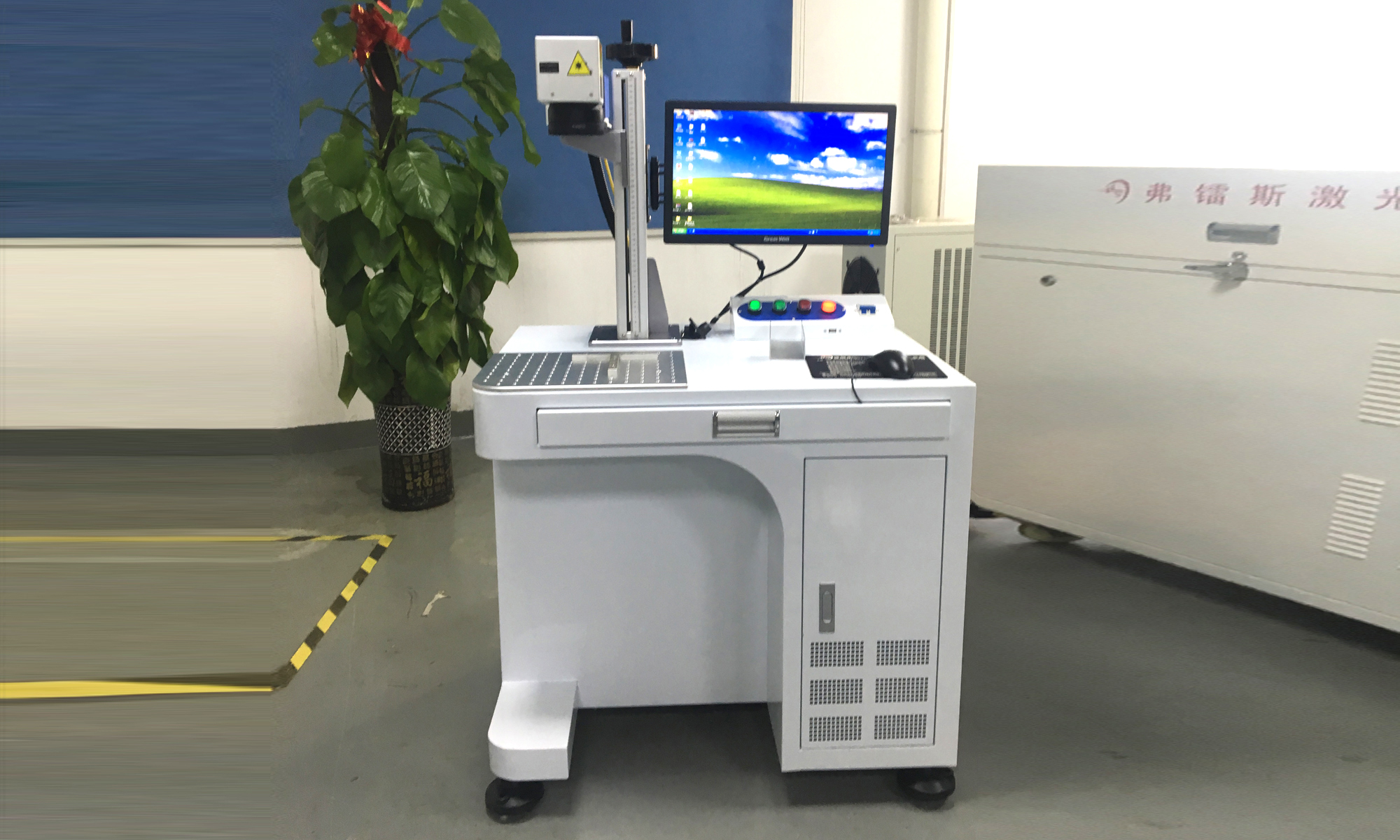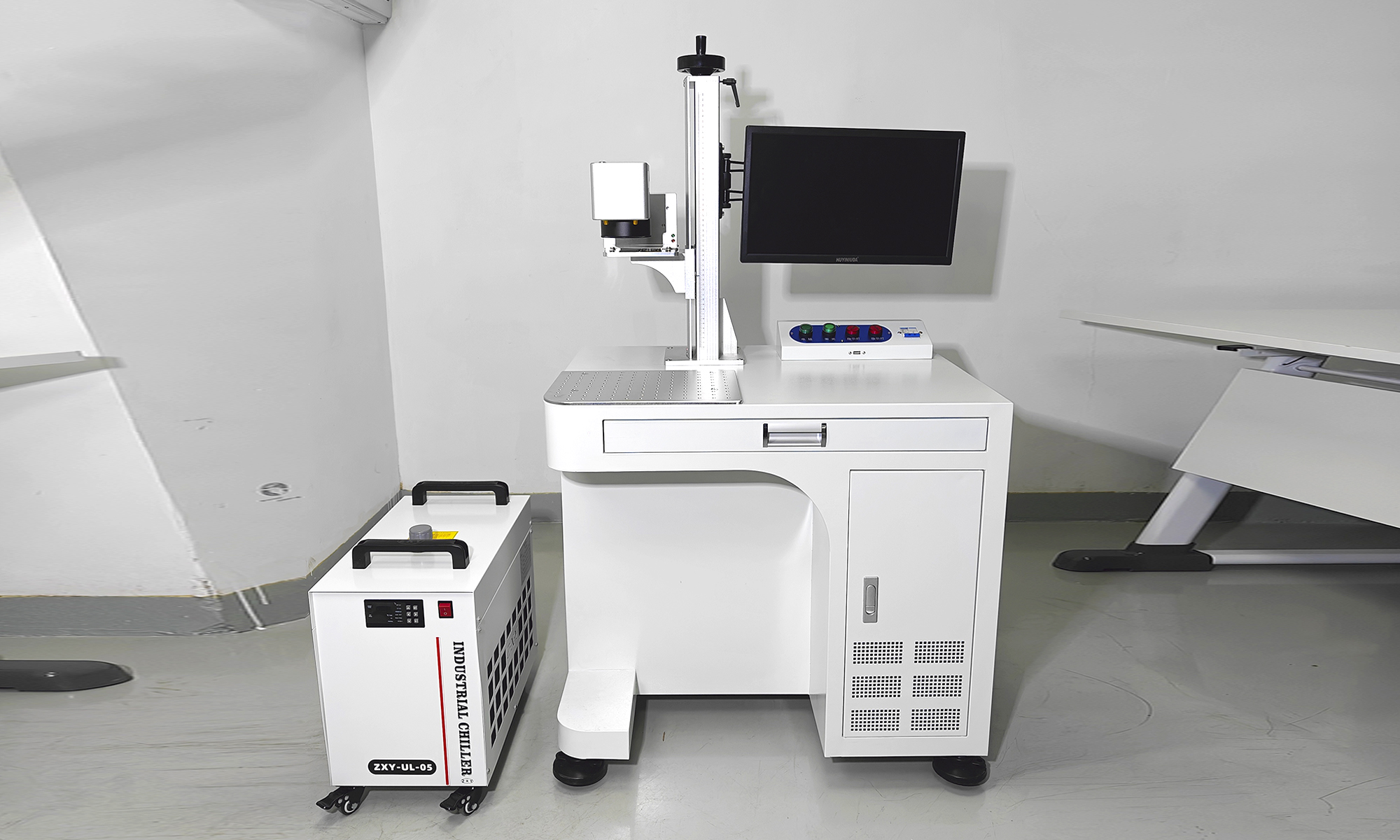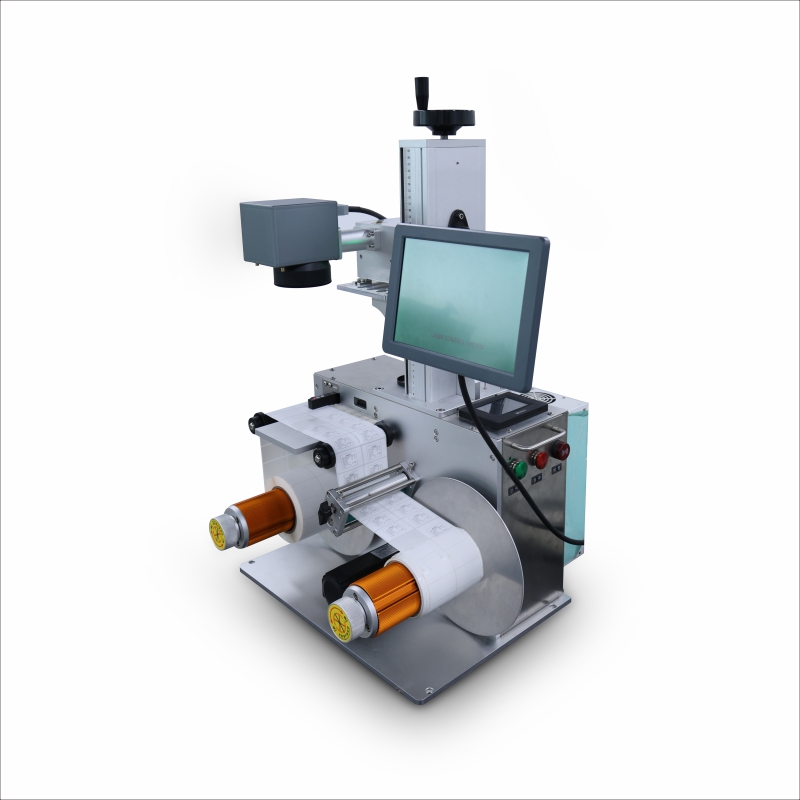
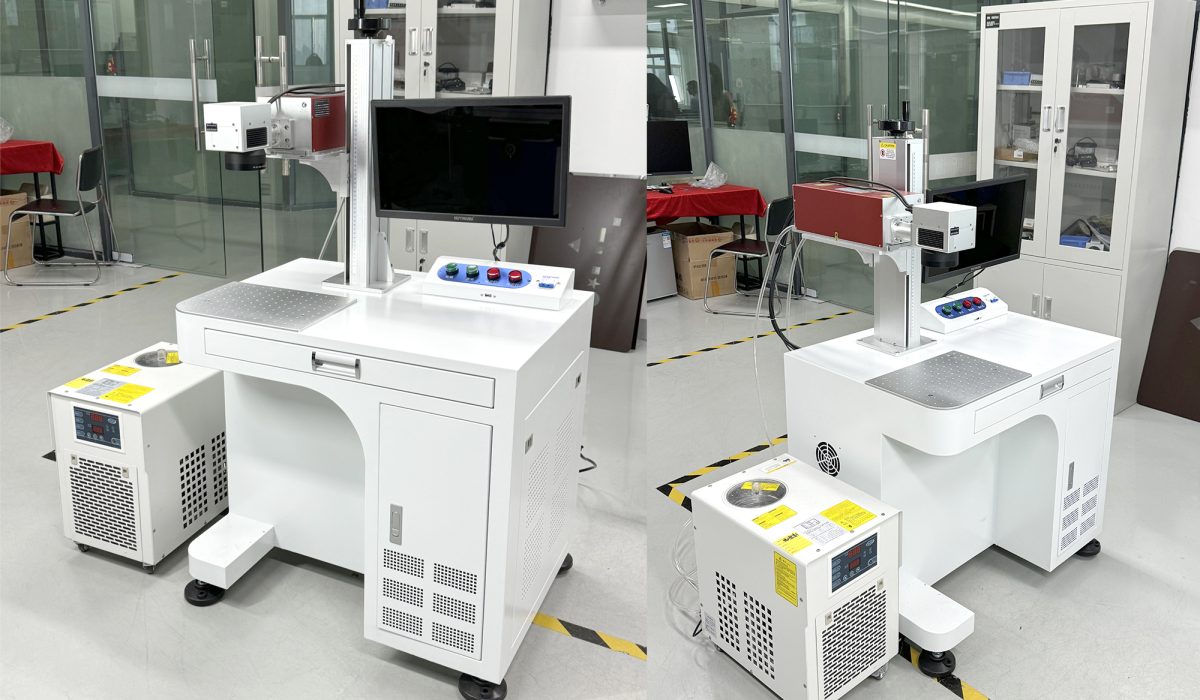
A UV laser marking machine is an industrial cold-processing marking system. It uses a 355nm ultraviolet solid-state laser source to deliver ultra-fine, near-zero thermal-damage permanent marks on plastics, glass, ceramics, PCB boards, medical consumables and high-precision electronic components. This UV laser marking machine processes material through direct photochemical ablation, not high heat. It is the most reliable choice for delicate heat-sensitive parts that cannot tolerate any surface deformation.
Unlike traditional infrared fiber or CO2 lasers, this UV laser marking machine never creates obvious heat-affected zones. It will not cause material melting, cracking or discoloration. In this guide, we break down everything you need to know before investing in a UV laser marking machine. We cover how it works, its core advantages, real industry applications, critical specifications to compare, accurate 2026 pricing ranges, and a practical 6-step selection checklist.
What Makes This UV Laser Marking Machine Different
Most manufacturers that first use fiber or CO2 lasers quickly hit a hard performance limit. Fiber lasers leave visible heat marks on many plastics. CO2 lasers cannot produce fine enough marks on thin glass or high-precision electronics. A UV laser marking machine solves exactly these pain points.
The 355nm ultraviolet wavelength on this UV laser marking machine is far shorter than standard fiber and CO2 laser wavelengths. This short wavelength carries extremely high single-photon energy. It breaks the molecular bonds of the material surface directly, instead of relying on high heat to melt or vaporize the material. The industry calls this unique mechanism “cold marking”.
For production teams that have spent months fighting with burnt edges, cracked glass, deformed plastic parts and fuzzy fine characters, switching to a proper UV laser marking machine is often the single upgrade that immediately eliminates 80% of daily marking quality complaints.
Our UV laser marking machine product line is built specifically for long-term 24/7 high-precision industrial production.
How Does a UV Laser Marking Machine Work
The full workflow of a UV laser marking machine follows a highly controlled, low-heat processing sequence. It never exposes the surrounding material to destructive thermal stress.
- UV Laser Source Generates 355nm Wavelength Beam
The all-solid-state UV laser inside this UV laser marking machine frequency triples the original 1064nm infrared beam. It converts it into a pure 355nm ultraviolet output. This process eliminates the broad heat spectrum that causes unwanted thermal damage. - Beam Passes Through High-Precision Galvo Scanner
Two high-speed motorized mirrors inside the galvo head steer the UV beam across the working field. They draw the exact vector path defined in your marking file. - F-theta Lens Focuses Light to a Micron-Sized Spot
The UV-specialized F-theta focusing lens on this UV laser marking machine compresses the laser energy into an extremely small spot, often less than 10μm in diameter. This level of spot fineness is impossible to achieve with standard fiber or CO2 lenses. - Photochemical Ablation Takes Place on Material Surface
Instead of heating the material until it melts, the high-energy UV photons break the molecular structure of the top material layer directly. This process removes or modifies the surface with almost no heat transfer to the surrounding area. - High-Contrast Mark Forms Without Surface Damage
The result is a sharp, clean, high-contrast mark with no burrs, no melting edges, no micro-cracks, and no visible heat discoloration. Even on ultra-thin films or brittle glass, the surrounding material remains completely intact.
Every core optical component in a UV laser marking machine must be specifically optimized for ultraviolet wavelength. Using generic infrared optical parts will cause severe light loss, poor focus, and drastically shortened machine lifetime. This is one hidden reason UV systems are more technically demanding than standard fiber or CO2 lasers.
Core Advantages of a UV Laser Marking Machine
These unique cold-processing benefits make a UV laser marking machine irreplaceable in many high-precision industrial sectors.
Near-Zero Heat-Affected Zone
The heat-affected zone on a UV marked part from this UV laser marking machine is typically smaller than 10μm. This means you can mark parts as thin as 0.1mm without causing warping, bending, or perforation. For thin plastic films, flexible PCBs and ultra-fine electronic components, this is a non-negotiable requirement.
Ultra-Fine Marking Resolution
With a spot size smaller than 10μm, this UV laser marking machine can clearly mark characters as small as 0.05mm. This level of precision is required for marking tiny 2D codes, component serial numbers and reference alignment marks on modern miniaturized electronics.
Excellent Mark Quality on Wide Range of Materials
This UV laser marking machine performs reliably on materials that are extremely difficult for other lasers. These materials include transparent glass, PET, PP, PE, ABS, PC, PVC, silicone, ceramic, thin metal coatings and many special engineering plastics. One single UV machine can handle most of your non-metal and thin coating marking tasks.
No Consumables, No Pollution
Like other industrial laser systems, a UV laser marking machine requires no ink, no solvents, no labels and no printing molds. It produces no chemical waste, no volatile fumes, and creates zero ongoing consumable cost after the initial investment.
Permanent, Anti-Counterfeit Marks
UV marks created inside or just beneath the material surface cannot be easily wiped off, polished away or altered. This makes a UV laser marking machine perfect for anti-counterfeiting codes, traceability QR codes and permanent product identification on high-value consumer goods and medical parts.
Extremely Low Noise and Vibration
High-quality industrial UV laser marking machines run smoothly with almost no vibration. This stable optical environment ensures consistent marking quality even after thousands of working hours.
Meets Strict Industry Compliance Requirements
For medical devices, food packaging and cosmetic products, UV cold marking avoids introducing thermal deformation or residual contamination that could violate strict global health and safety regulations.
Key Industrial Applications for a UV Laser Marking Machine
A UV laser marking machine is widely deployed in sectors where marking precision, material safety and zero thermal damage are top priorities.
- Consumer Electronics: Marking logos, serial numbers, QR codes and tiny component codes on phone casings, charging ports, camera lenses, earphone shells and flexible circuit boards.
- Medical Devices: UDI-compliant permanent marking on surgical instruments, disposable syringes, catheter parts, medicine packaging and implantable components, meeting FDA and global medical traceability standards.
- PCB & Semiconductor Industry: Marking identification codes and reference marks on bare PCBs, FPC flexible boards, IC chips and wafer-level packaging parts without damaging circuit performance.
- Precision Glass & Optics: Marking reference lines, part numbers and patterns on optical lenses, display glass, watch glass and thin glass wafers without cracking or chipping.
- Cosmetics & Personal Care: Marking batch numbers, expiration dates and anti-counterfeit codes on cosmetic glass bottles, plastic caps and thin film packaging.
- Automotive Electronics: Marking safety-critical sensors, connectors and control module components that cannot tolerate any thermal stress during manufacturing.
- Wire & Cable Industry: High-speed continuous marking on thin insulation layers of wires and cables, without damaging the internal conductor structure.
- Food & Beverage Packaging: Non-contact marking on PET bottles, plastic caps and flexible food packaging films, no ink contamination risk.
If your production line currently struggles with burnt marks, cracked parts or fuzzy fine characters, a UV laser marking machine is almost always the technical upgrade that solves those problems permanently.
Key Specifications to Evaluate for Your UV Laser Marking Machine
When comparing different UV laser marking machines, these specifications will have the biggest real-world impact on your daily production performance.
UV Laser Output Power
Common industrial UV power levels are 3W, 5W, and 10W.
- 3W: Best for ultra-fine, shallow surface marking on thin films, glass and extremely delicate plastic parts.
- 5W: The most popular general-purpose industrial configuration, balancing marking speed, precision and long-term source lifetime.
- 10W: Designed for faster processing on thicker materials or when you need controlled slight material removal without thermal damage.
For 90% of standard UV marking applications, 5W remains the most cost-effective and widely recommended choice.
Laser Source Lifetime
A high-quality all-solid-state UV laser source typically offers 20,000 to 50,000 hours of rated working lifetime. Cheaper low-quality UV modules can fail after only a few thousand hours, causing unexpected production stops and expensive repair costs.
Marking Field Size
Common standard working fields are 110×110mm, 150×150mm and 200×200mm. Larger working fields allow you to process more parts in one batch, but will slightly reduce the minimum achievable spot fineness.
Beam Quality (M² Value)
A good UV laser should deliver an M² value below 1.2. Lower M² means the laser beam is more concentrated, the spot is sharper, and marking quality is far more consistent across the entire working field.
Galvo Scanner Speed
Industrial UV galvo scanners typically support maximum marking speeds between 5000mm/s and 7000mm/s. Real production speed depends on graphic complexity, not just the maximum number printed on the spec sheet.
UV-Specific Optical Components
All lenses, protective windows and optical elements inside the machine must be coated and optimized for 355nm wavelength. Using generic infrared optics will cause severe UV light attenuation, poor marking quality and rapid component aging.
Software Compatibility
The marking software must support all common industrial file formats including AI, DXF, PLT, BMP, JPG, PNG, and standard 1D/2D code formats such as Data Matrix, QR Code and Barcode. It should also support automatic variable serial number marking for traceability applications.
2026 Real UV Laser Marking Machine Price Ranges
UV laser technology is more complex than standard fiber or CO2 systems, which naturally reflects in the market pricing. Below are realistic 2026 industrial price ranges for reference.
表格
| Configuration | Entry Level | Mid-Range Industrial | High-End Premium |
|---|---|---|---|
| 3W UV Laser Marking Machine | 3,000–5,000 | 5,000–8,000 | 8,000–13,000+ |
| 5W UV Laser Marking Machine | 4,500–7,000 | 7,000–11,000 | 11,000–17,000+ |
| 10W UV Laser Marking Machine | 7,000–10,000 | 10,000–15,000 | 15,000–24,000+ |
The biggest hidden cost of buying an ultra-cheap UV laser marking machine is not the initial purchase price. Low-quality UV sources often degrade rapidly after 6–12 months of use, marking quality drops sharply, and the machine stops performing as it did on day one. For high-value production lines, the resulting scrap loss and downtime can quickly exceed the full cost of the machine.
A properly configured 5W industrial UV laser marking machine usually delivers full return on investment within 12 to 24 months, through reduced scrap rate, eliminated ink cost and improved production efficiency.
6-Step Practical Selection Guide for Your UV Laser Marking Machine
Follow this clear workflow to select the right UV laser marking machine for your production line.
- List all your primary processing materials first — this will immediately confirm whether 3W, 5W or 10W power is the correct choice.
- Define your minimum required character size — if you need to mark characters smaller than 0.1mm, you will need a high-precision optical configuration.
- Estimate your daily production volume — this tells you what speed level and working field size you need to meet your throughput target.
- Prepare your real sample parts — never decide based only on spec sheets. Send your actual workpiece to the supplier and watch the real marking result.
- Check software ease of use — if the operating interface is too complicated for your operators, the machine will never reach full production potential.
- Verify long-term after-sales support — UV lasers require occasional professional optical calibration. A good supplier must be able to provide reliable remote and on-site technical support.
Not sure which UV configuration fits your parts best? Send us your material sample, and our UV laser engineers will run a free full marking test and send you back photos and video of the actual result.
Why Choose Shenzhen FLS Laser UV Laser Marking Systems
Shenzhen FLS Laser is a direct industrial laser equipment manufacturer with more than 12 years of UV laser R&D and manufacturing experience.
- All UV laser marking machines use top-tier brand 355nm all-solid-state UV laser sources.
- All optical components are specially selected and anti-reflection coated for 355nm ultraviolet wavelength.
- Full CE, FDA and ISO certification, meeting global export regulatory requirements.
- 2-year full machine warranty, lifetime technical support and free software updates.
- Free sample marking service for every customer — send us your part, we mark it for free and send you back result photos and video within 24 hours.
- Customizable options including rotary axes, automatic vision positioning systems, safety enclosures and production line integration.
- Full English operation videos, user manuals and remote online training are included with every machine.
Frequently Asked Questions
Q: Can a UV laser marking machine mark on glass without cracking?
A: Yes. The cold-processing mechanism of UV lasers can create high-contrast fine marks on glass with extremely low thermal stress, almost zero risk of cracking.
Q: How long does a UV laser source last?
A: A high-quality industrial all-solid-state UV laser source typically delivers 20,000 to 50,000 hours of working lifetime under normal operating conditions.
Q: Can UV lasers mark on transparent plastic?
A: Yes. UV lasers can create hidden or visible high-contrast marks inside transparent PP, PE, PET and PC materials, without breaking the surface smoothness.
Q: Is UV laser marking safe for food and medical contact parts?
A: Yes. Cold UV marking produces no thermal contamination, no residual ink and no chemical residue, making it fully compliant with most food and medical safety regulations.
Q: What file formats does UV marking software support?
A: Standard industrial UV marking software supports AI, DXF, PLT, DWG, BMP, JPG, PNG and all common 1D/2D code formats.
Ready to upgrade your precision marking quality and eliminate thermal damage problems? Contact Shenzhen FLS Laser today for a free UV laser marking test and custom configuration recommendation.
Related Articles:UV Vision Laser Marking Machine: The Complete 2026 Buyer’s Guide