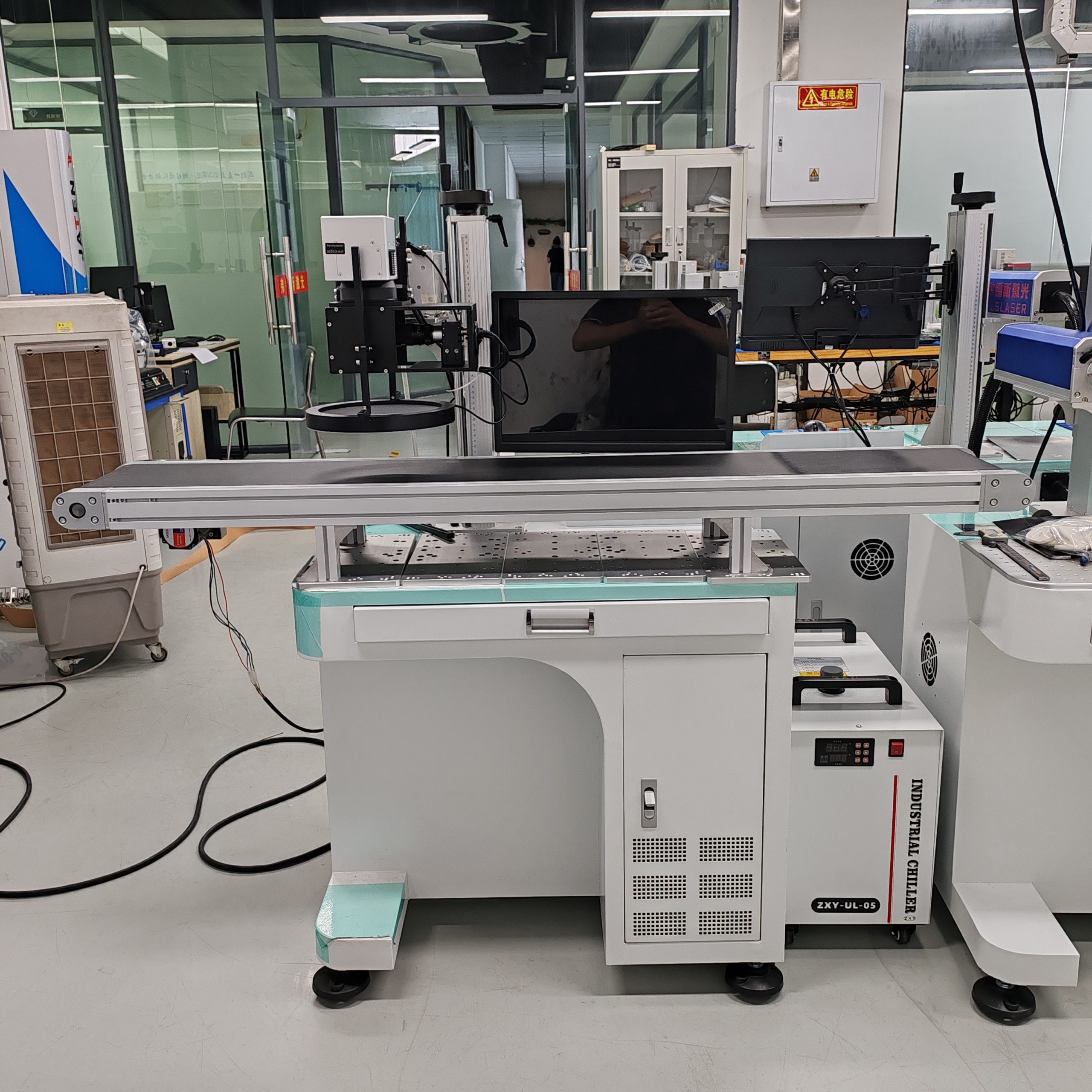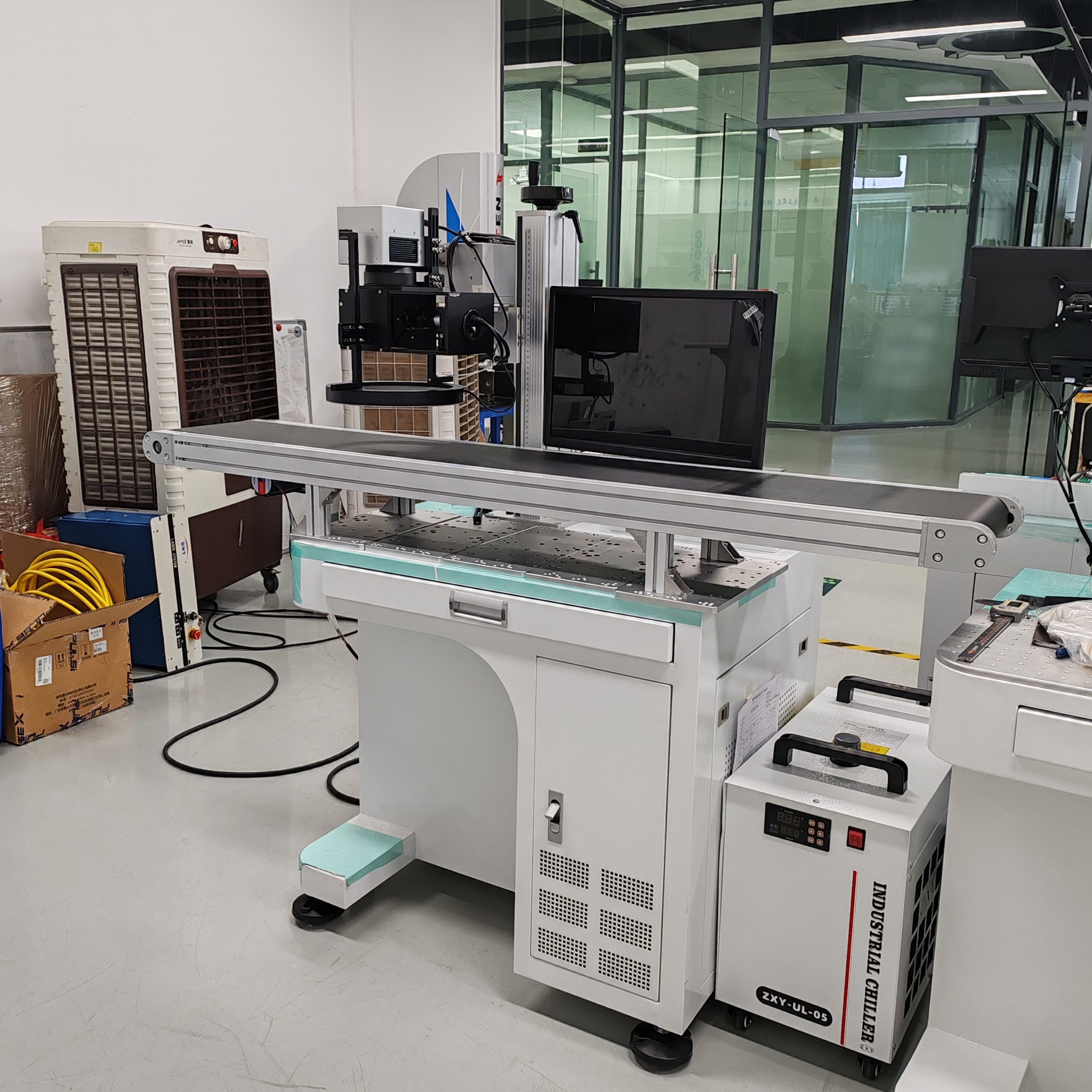
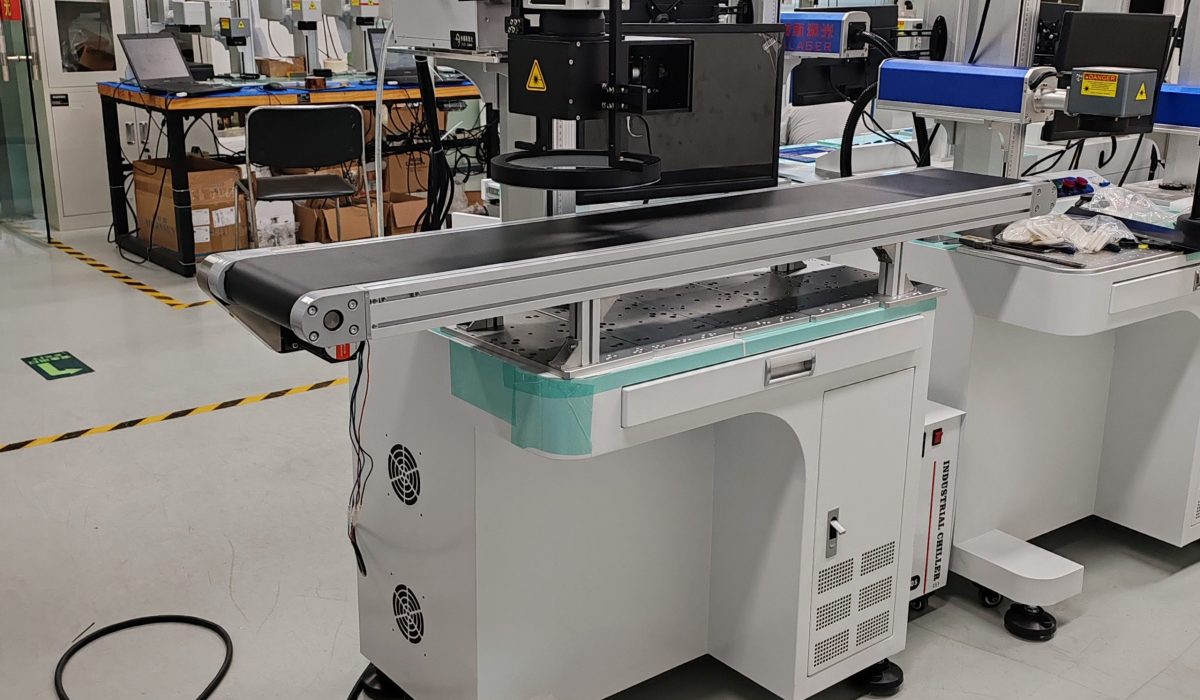
A UV vision marking machine combines 355 nm ultraviolet laser cold-processing technology with CCD visual positioning to deliver ultra-precise, damage-free marking on heat-sensitive and micro-sized parts. Unlike fiber laser markers that rely on thermal ablation, a UV vision marker breaks molecular bonds directly—producing sharp, permanent marks with a heat-affected zone (HAZ) of less than 5 micrometers.
If you manufacture electronics, medical devices, semiconductors, or high-end consumer goods, understanding how a UV vision marking machine works, what configurations are available, and which materials it handles best is critical before you invest. This complete guide covers everything from working principle to maintenance, so you can evaluate whether a UV vision marking machine is the right fit for your production line.
How Does a UV Vision Marking Machine Work?
A UV vision marking machine operates on a two-stage principle: visual positioning + photochemical marking.
1. Vision Positioning Stage
First, a high-resolution industrial CCD or CMOS camera captures an image of the workpiece as it enters the marking area. The machine’s built-in vision algorithm performs template matching to detect the part’s position, angle, and even surface curvature. It then sends corrected coordinate data to the galvanometer scanner.
This means workpieces can be placed randomly on the conveyor or tray—no custom jigs or precision fixturing are required. Typical positioning accuracy reaches ±0.01 mm with a detection speed under 100 ms per part.
2. UV Laser Marking Stage
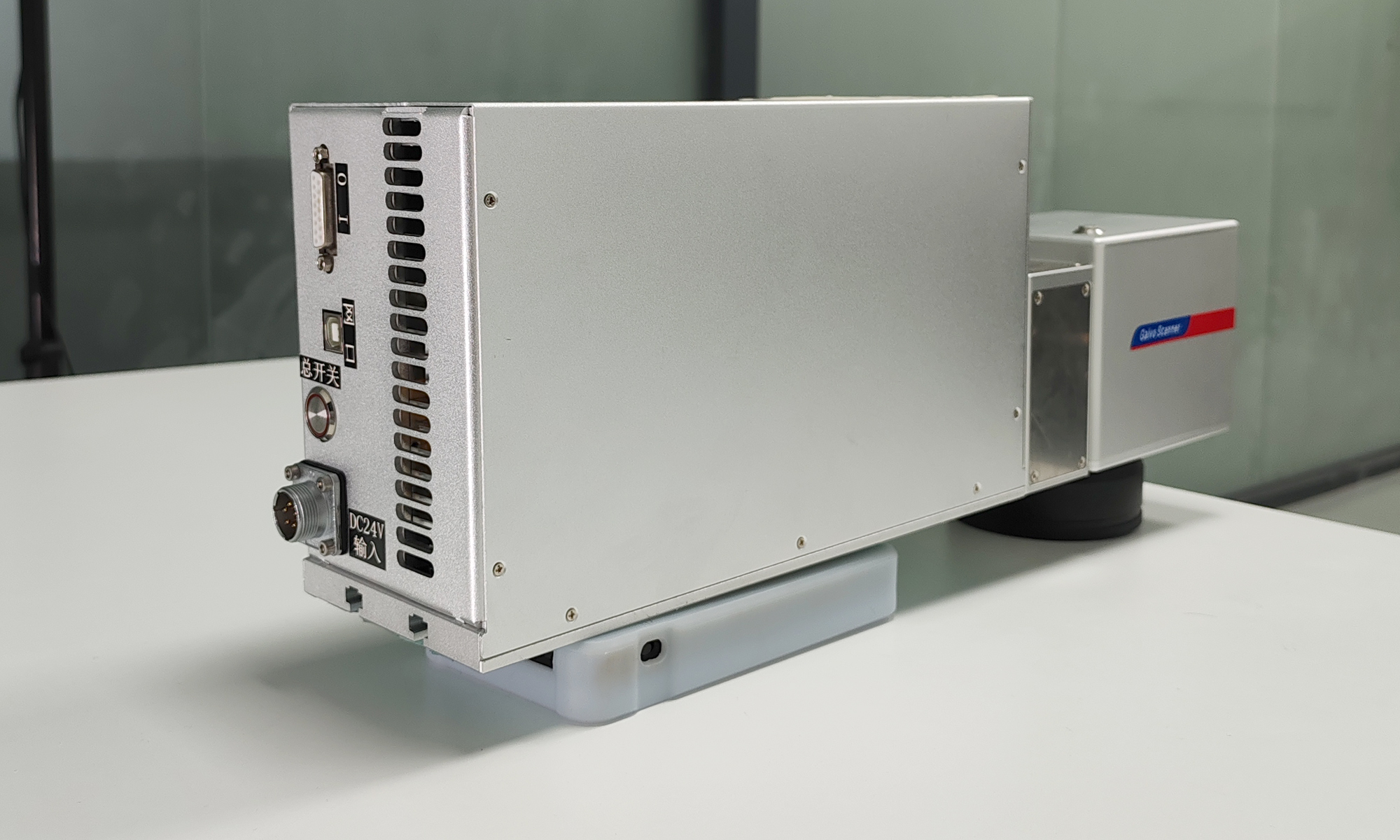
The UV laser source generates a 355 nm wavelength beam through third-harmonic generation (THG). A 1064 nm infrared beam passes through two nonlinear crystals, first doubling the frequency to 532 nm (green), then tripling it to 355 nm (ultraviolet).
Because 355 nm photons carry much higher energy than infrared photons, they can break molecular bonds directly through a photolytic (cold) process rather than melting or vaporizing material with heat. This is why the UV vision marking machine can mark plastics, glass, ceramics, and thin-film materials without causing discoloration, warping, or micro-cracks.
The beam is then steered by a high-speed galvanometer scanner and focused through an F-theta lens onto the workpiece surface, creating text, barcodes, QR codes, logos, or micro-patterns with line widths as fine as 10 micrometers.
5 Core Components of a UV Vision Marking Machine
Every UV vision marking machine is built around five key subsystems. The quality of each directly affects marking accuracy, speed, stability, and total cost of ownership.
① UV Laser Source (355 nm)
The laser source is the heart of the machine. Common power ratings include:
| Power | Typical Use Case | Marking Speed |
|---|---|---|
| 3W | Entry-level precision marking on plastics & small electronics | Standard |
| 5W | Most popular for electronics, PCB, and medical devices | High |
| 10W | Deep marking on glass, ceramics, and thick-film materials | Very high |
| 15W+ | Heavy-duty industrial, semiconductor wafer processing | Maximum |
Leading UV laser brands include INNO, JPT, RAYCUS, Huaray, and Nlight. A quality UV laser typically provides 20,000+ hours of effective operating life.
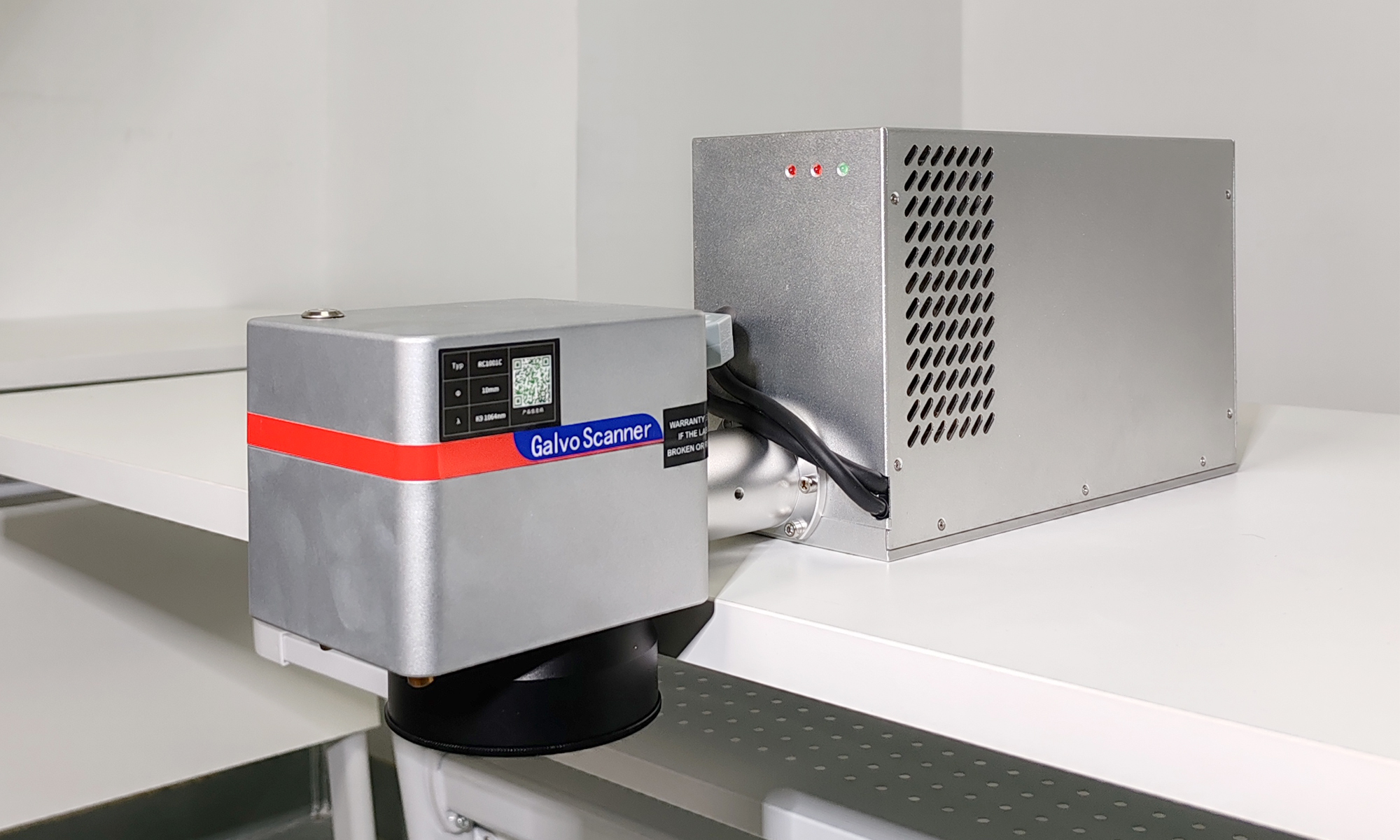
② Galvanometer Scanner (Galvo)
The galvo scanner controls the laser beam’s X-Y movement. For UV vision marking machine applications, a digital high-speed galvo with a 10 mm aperture is standard. Top models support marking speeds up to 7,000 mm/s and repeat positioning accuracy of ±0.002 mm.
Premium galvo brands include Scanlab (Germany), Raylase, Sinogalvo, and JCZ.
③ Visual Positioning System
This is the defining feature that sets a UV vision marking machine apart from a standard UV marker. The system consists of:
- A 5 MP industrial CCD/CMOS camera with a telecentric or coaxial lens
- An LED ring light or coaxial light source for uniform illumination
- Vision processing software with template matching, edge detection, and multi-target tracking
- Real-time coordinate correction sent to the galvo
Advanced systems support multi-part simultaneous detection, 360° rotation correction, and even defect detection (marking OK parts and skipping NG parts automatically).
④ F-Theta Field Lens
The F-theta lens focuses the laser beam across the entire working field while maintaining a flat focal plane. Common working areas for UV vision marking machine models include 110×110 mm, 175×175 mm, and 300×300 mm.
For high-precision applications, telecentric F-theta lenses are recommended because they keep the beam perpendicular across the entire field, eliminating edge distortion.
⑤ Control Software & Cooling System
The control software (commonly EZCAD 3 or proprietary solutions) handles file import (DXF, PLT, BMP, JPG, PNG), parameter setting, and production data management. Industrial models support MES/ERP integration via Ethernet, RS232, or OPC UA protocols.
Because UV lasers are temperature-sensitive, a precision water chiller (for 5W+ models) with ±0.5°C temperature stability is essential for consistent output power and long laser life. Lower-power 3W models may use air cooling.
What Materials Can a UV Vision Marking Machine Mark?
The UV vision marking machine excels on materials that are difficult or impossible to mark with fiber or CO2 lasers due to heat sensitivity or precision requirements.
✅ Ideal Materials
- Plastics & Polymers — ABS, PC, PP, PE, PVC, PEEK, PBT, nylon, silicone, and LSR. Produces clean white or dark marks without burning.
- Glass & Quartz — Soda-lime glass, borosilicate, optical glass, sapphire. Creates high-contrast, crack-free marks.
- Ceramics — Alumina, zirconia, silicon nitride. Perfect for electronic substrates and medical implants.
- Semiconductors & Wafers — Silicon wafers, gallium arsenide, SiC. Micron-level marking for traceability.
- PCB & FPC — Rigid and flexible printed circuit boards. Marks QR codes and serial numbers without damaging copper traces.
- Thin Films & Coatings — ITO, passivation layers, dielectric films. Selective ablation with sub-micron precision.
- Metals (Thin/Delicate) — Stainless steel, aluminum, and copper foils for fine text and micro-QR codes.
⚠️ Less Suitable Materials
- Thick metal deep engraving (use fiber laser instead)
- Organic materials like wood, leather, and paper (use CO2 laser)
- Very high-volume, low-precision marking (fiber laser is more cost-effective)
Key Industries & Real-World Applications
The UV vision marking machine has become indispensable in industries where precision, cleanliness, and traceability are non-negotiable.
1. Electronics & Semiconductor Manufacturing
In PCB factories, a UV vision marking machine marks QR codes, date codes, and serial numbers directly on rigid and flexible circuit boards. Vision positioning automatically corrects for panel stretch, rotation, and placement variation—critical for high-mix SMT lines. In semiconductor fabs, it marks wafer IDs, die codes, and traceability data with features as small as 5 μm.
2. Medical Device & Pharmaceutical
Surgical instruments, implantable devices, catheter hubs, and syringe barrels all require permanent, biocompatible marking. A UV vision marking machine creates marks that withstand autoclaving, chemical sterilization, and years of use—without adding any ink or coating that could leach into the body. It also marks glass vials, ampoules, and blister packs for pharmaceutical traceability.
3. Automotive & Aerospace
Automotive sensors, ECU housings, connectors, and aerospace turbine blades demand marks that survive extreme temperatures, vibration, and corrosion. The UV vision marking machine applies Data Matrix codes and unique identifiers directly on plastic and ceramic components, supporting full supply-chain traceability under standards like IATF 16949 and AS9100.
4. Precision Optics & Photonics
Lenses, filters, prisms, and fiber optic connectors require identification marks that do not affect optical performance. A UV vision marking machine creates sub-surface or edge marks on optical glass with no chipping, no deformation, and zero impact on light transmission.
5. High-End Consumer Goods & Cosmetics
Luxury cosmetic bottles, perfume caps, watch dials, and smartphone glass backs all benefit from the UV vision marking machine‘s ability to produce crisp, high-end marks on glass, metal, and plastic—no tool contact, no consumables, and perfect consistency across millions of units.
UV Vision Marking Machine vs. Fiber Laser Marker: A Comparison
Many buyers ask: when should I choose a UV vision marking machine over a standard fiber laser marking machine? Here is the breakdown.
| Feature | UV Vision Marking Machine | Fiber Laser Marking Machine |
|---|---|---|
| Wavelength | 355 nm (ultraviolet) | 1064 nm (near-infrared) |
| Marking mechanism | Photolytic (cold process) | Thermal ablation |
| Heat-affected zone | < 5 μm (negligible) | 20–100 μm |
| Best materials | Plastics, glass, ceramics, semiconductors | Metals, hard plastics, deep engraving |
| Minimum line width | 10 μm | 30–50 μm |
| Typical power | 3W–15W | 20W–100W+ |
| Visual positioning | Standard (CCD/CMOS) | Optional add-on |
| Initial cost | Higher ($8,000–$30,000) | Lower ($3,000–$15,000) |
| Laser lifespan | ~20,000 hours | ~100,000 hours |
| Maintenance complexity | Medium–high | Low |
Bottom line: Choose a UV vision marking machine when you need ultra-fine marks, cold processing, or automatic positioning on heat-sensitive, fragile, or micro-sized parts. Choose a fiber laser when you primarily mark metals, need deep engraving, or have tight budget constraints.
6 Maintenance Tips to Extend Machine Life
A UV vision marking machine is a precision instrument. Following these maintenance practices will keep it running at peak performance for years.
- Clean the optical components regularly. Use isopropyl alcohol (99%+) and lint-free cloth to clean the F-theta lens, field mirror, and protective window every 2–4 weeks depending on operating environment.
- Maintain the water chiller. For water-cooled models, change deionized or distilled water every 2–3 months and clean the filter monthly.
- Keep the camera lens clean. Dust or oil on the CCD lens degrades positioning accuracy. Blow off dust with compressed nitrogen first, then wipe gently.
- Calibrate vision-to-galvo alignment. After lens changes or transportation, run the calibration routine to ensure the vision coordinates match the galvo coordinates exactly.
- Control the operating environment. Keep the room temperature at 20–26°C and humidity at 40–60%. Avoid dust, oil mist, and vibration.
- Schedule annual professional servicing. Have a certified technician inspect the laser source, galvo, and cooling system once a year to catch issues early.
Frequently Asked Questions
Q1: How much does a UV vision marking machine cost?A: Entry-level 3W desktop models start around $6,000–$9,000. Mid-range 5W industrial models with CCD vision cost $10,000–$18,000. High-end 10W–15W production-grade systems with automation integration range from $20,000 to $35,000+.
Q2: Can a UV vision marking machine mark curved or 3D surfaces?A: Yes. Many models support 3D dynamic focusing and can mark on curved, inclined, or irregular surfaces. Combined with the vision system’s ability to detect surface height, the machine adjusts focus in real time for consistent mark quality.
Q3: How fast is a UV vision marking machine?A: Marking speed depends on content complexity, but typical rates are 2,000–7,000 mm/s. For a standard QR code on a plastic part, marking time is roughly 0.5–2 seconds per part, plus vision detection time (typically < 100 ms).
Q4: Is UV laser marking safe for operators?A: Yes, when properly enclosed. Industrial UV vision marking machine models come with full Class 1 safety enclosures, interlock switches, and OD6+ protective viewing windows. Never look directly at an exposed UV laser beam.
Q5: What software does a UV vision marking machine use?A: The most common is EZCAD 3, which supports all standard design file formats. Many manufacturers also offer proprietary software with advanced vision features, barcode generation, and database connectivity for serialization.
Final Thoughts
A UV vision marking machine is more than just a marking tool—it is a precision manufacturing system that combines cold-processing UV laser technology with intelligent visual positioning to solve marking challenges that no other laser type can handle. Whether you need to mark a 5 μm QR code on a silicon wafer, a logo on a glass cosmetic bottle, or traceability codes on medical implants, the UV vision marking machine delivers the accuracy, cleanliness, and consistency that modern industries demand.
If you are ready to evaluate specific models or want a free marking test on your actual parts, reach out to our engineering team for a personalized consultation.
Related Articles:Fiber Laser Marking Machine: Buying & Promotion Guide (Final 100% Green Version)