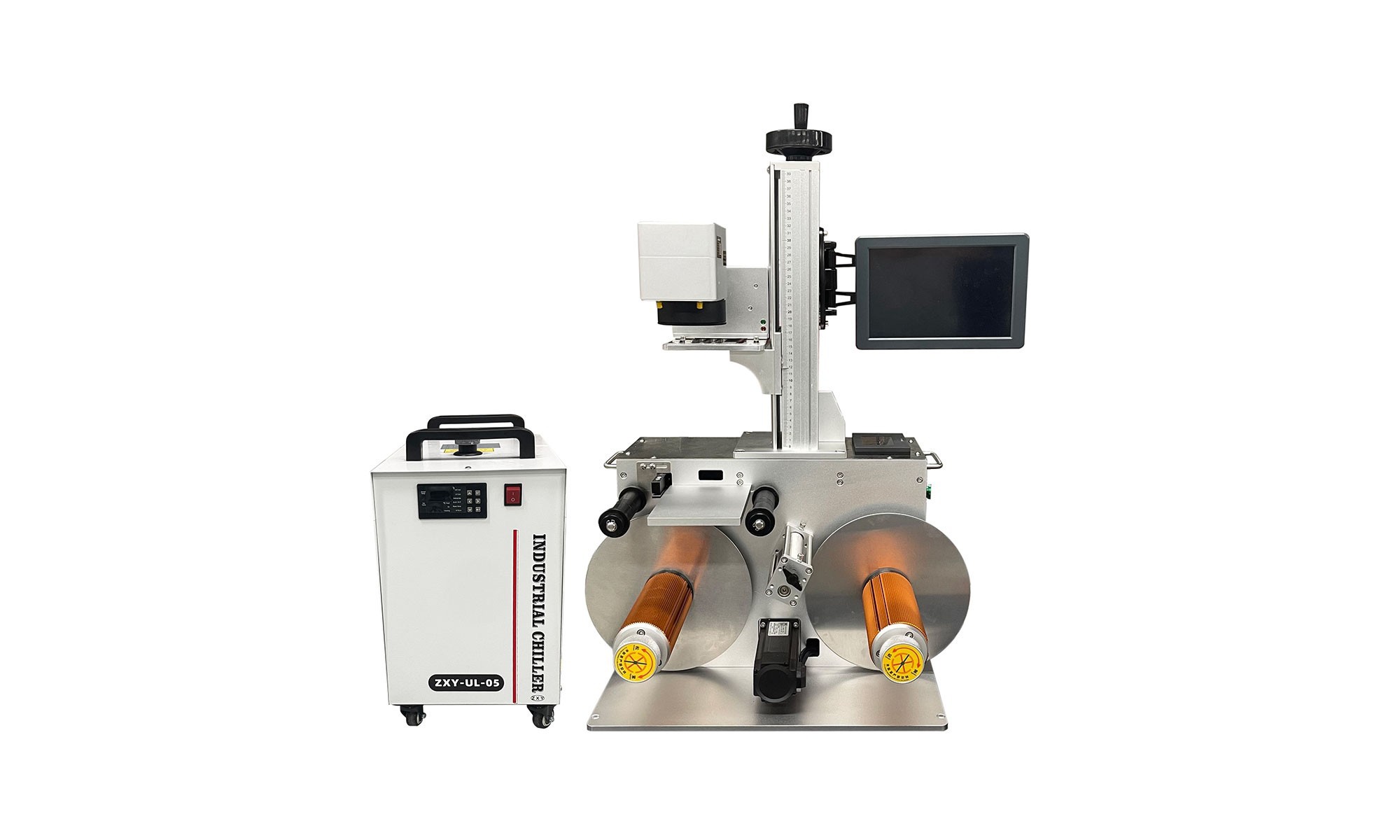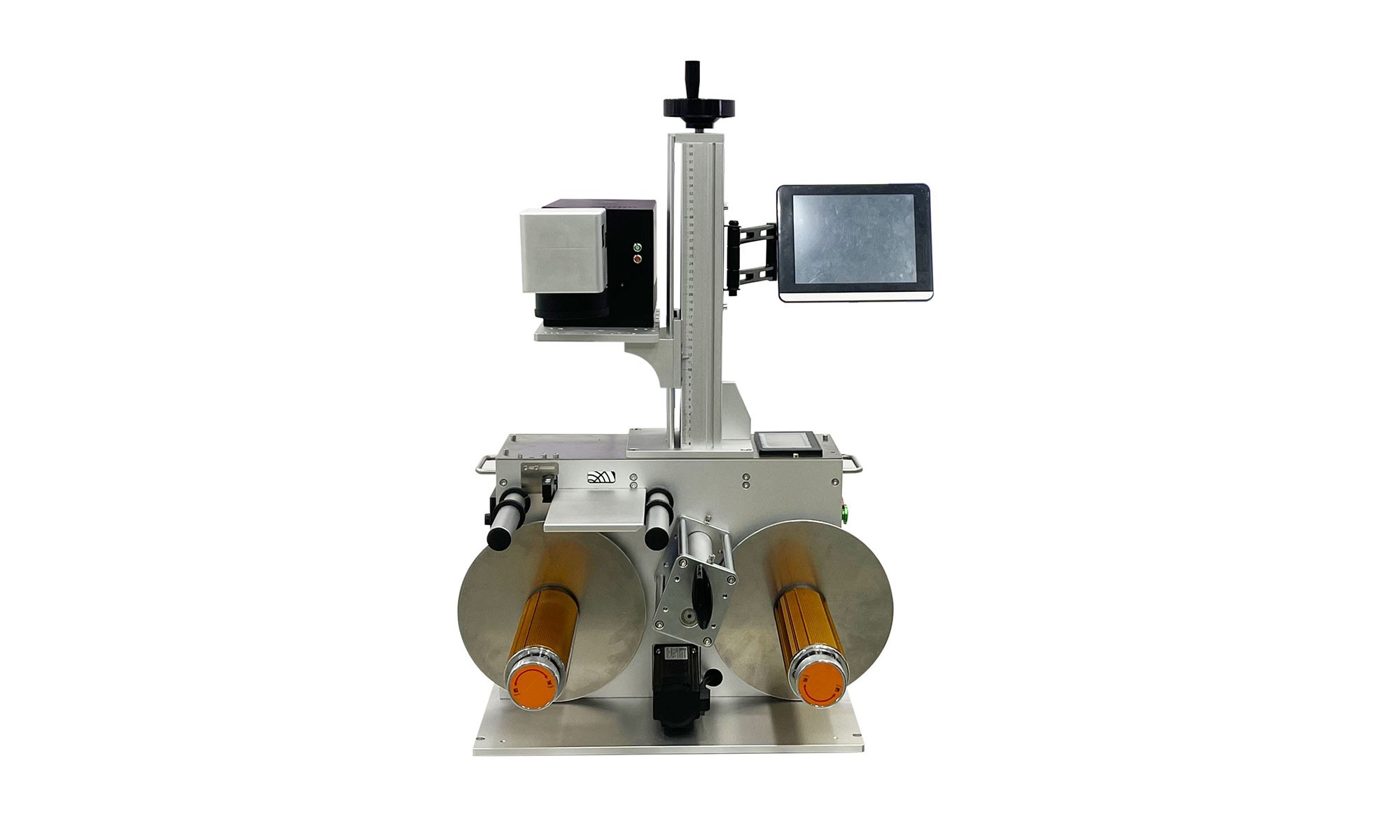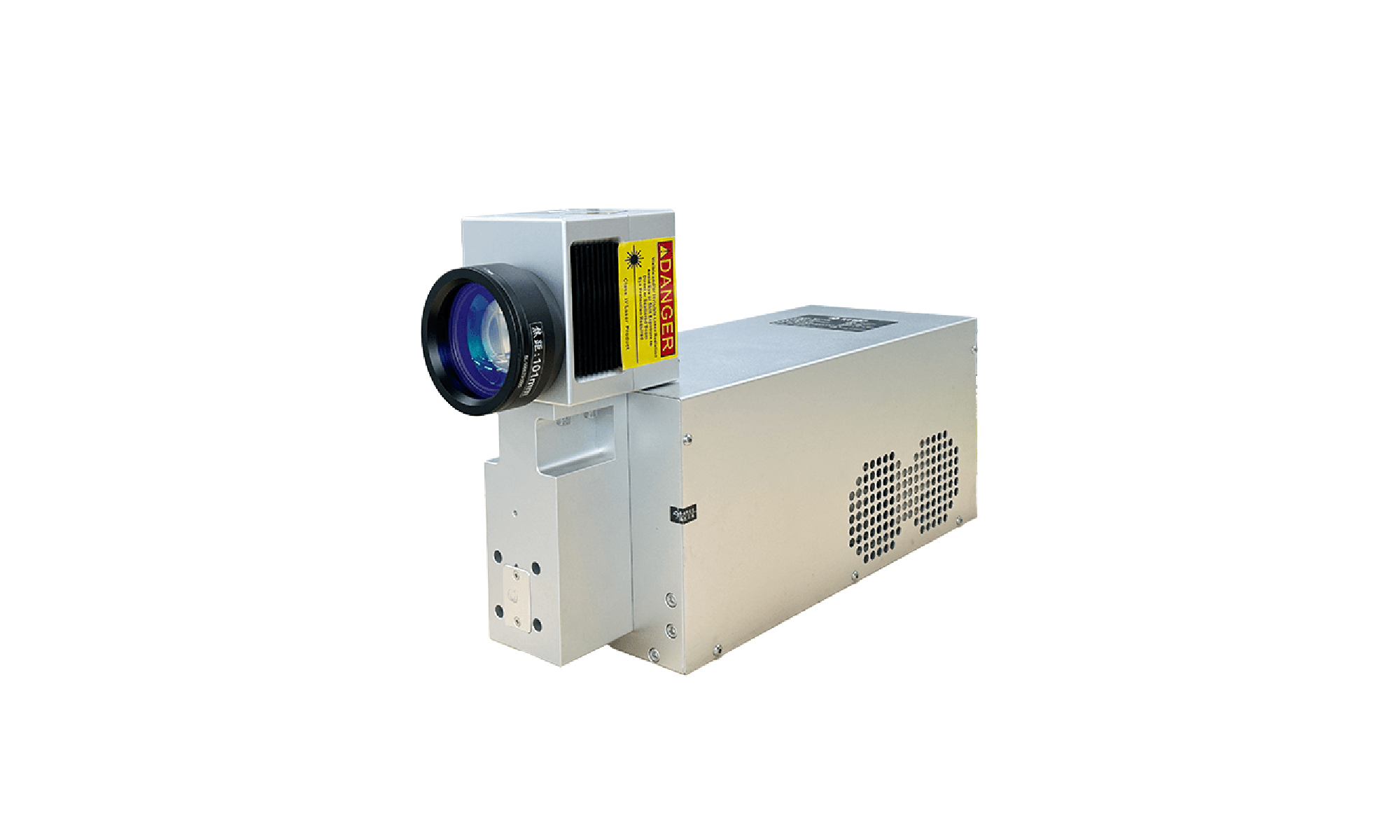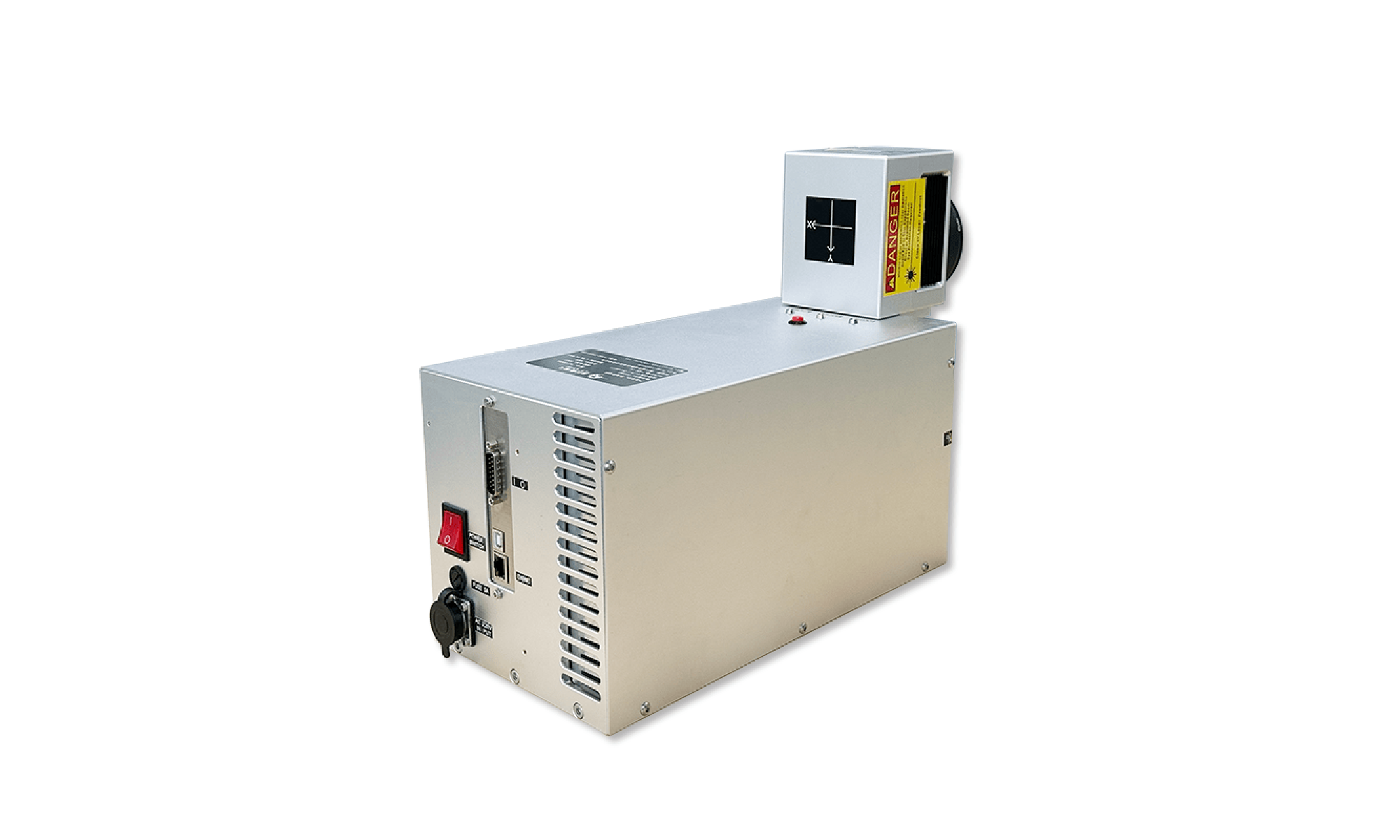
A laser marking machine for metal is a precision optical system, and the difference between an average result and an excellent one lies in the technical parameters nobody explains in a sales brochure. This guide goes deep into how a laser marking machine for metal actually works, which technical specifications genuinely matter, and how to tune parameters for stainless steel, aluminum, brass, copper, titanium and anodized surfaces. If you are comparing machines or evaluating specifications, this is the reference to keep.
Working Principle: How a Laser Marking Machine for Metal Creates a Permanent Mark
A laser marking machine for metal uses a fiber laser source emitting 1064 nm infrared light. The process has five stages:
- Laser generation — Pump diodes excite a doped fiber (ytterbium) inside the source, producing a high-quality laser beam with electro-optical efficiency above 30%.
- Beam delivery — The beam travels through a fiber cable to the marking head, preserving beam quality (M² close to 1).
- Beam expansion and steering — A beam expander adjusts the spot size, then a galvanometer scanner with two high-speed mirrors directs the beam across the field at up to 7,000–12,000 mm/s.
- Focusing — An f-theta (flat-field) lens focuses the beam to a 10–50 µm spot, keeping focus consistent across the entire marking area.
- Material interaction — The concentrated energy raises surface temperature, causing oxidation, annealing, carbonization or vaporization, producing a permanent marks through oxidation and annealing on metal surfaces.
Fiber, MOPA, Green and UV: Choosing the Right Source for Metal
The laser source defines what a laser marking machine for metal can and cannot do.
| Source Type | Wavelength | Best For on Metal | Notes |
|---|---|---|---|
| Q-switched fiber | 1064 nm | Standard black/white marks on all metals | Most economical, highest volume |
| MOPA fiber | 1064 nm | Color marking on stainless steel & titanium | Pulse-width tunable, premium price |
| Green laser | 532 nm | Copper, gold, high-reflectivity metals | Better absorption on red metals |
| UV laser | 355 nm | Coated, thin-film and heat-sensitive surfaces | Cold marking, minimal HAZ |
For pure metal marking, Q-switched fiber covers 80% of applications. For coated metals and heat-sensitive thin-film surfaces that require UV sources, a 355 nm UV system is the better choice.
The Technical Specifications That Actually Determine Quality
1. Average Power (W)Higher power means faster marking and deeper engraving. 20W suits surface marking; 50W+ enables 0.3–1 mm depth on stainless steel. A laser marking machine for metal at 30W is the industry’s most common sweet spot.
2. Marking Speed (mm/s)Galvo systems reach 7,000–12,000 mm/s. Real throughput depends on graphic complexity and hatch spacing, not the peak figure on the datasheet.
3. Beam Quality (M²)A value near 1 indicates a near-perfect beam — smaller spot, finer lines, more consistent energy. High-end sources achieve M² < 1.3.
4. Spot Diameter and Line WidthMinimum line width of 0.01–0.02 mm is achievable with quality optics, essential for micro-text, UDI codes and dense barcodes on production lines.
5. Repeatability / Positioning Accuracy±0.01 mm is standard; ±0.003 mm is available for medical and aerospace. This determines multi-position mark consistency.
6. Pulse Frequency (kHz)Higher frequency produces smoother, lighter marks; lower frequency produces darker, deeper marks. This is a key tuning lever on a laser marking machine for metal.
7. Marking DepthDepth is a function of power, frequency, speed and number of passes — not a fixed number. Typical ranges: 0.01–0.5 mm (fiber), up to 1–5 mm with high-power sources and multi-pass.
Marking Parameters by Metal Type
Green lasers are particularly effective for these high-reflectivity red metals, as real customer applications demonstrate.
| Metal | Recommended Power | Frequency | Typical Result |
|---|---|---|---|
| Stainless steel | 20–30W | 20–60 kHz | High-contrast black/white |
| Aluminum | 20–50W | 30–80 kHz | Light gray, needs tuning |
| Brass / Copper | 30–50W (green ideal) | 40–100 kHz | Good with higher power |
| Anodized aluminum | 10–20W | 20–50 kHz | High-contrast white |
| Titanium | 20–30W (MOPA for color) | 30–80 kHz | Color/black achievable |
| Galvanized steel | 20–30W | 30–60 kHz | Risk of coating damage — tune low |
Optics: Field Lens and Marking Area Fundamentals
The f-theta lens determines the marking area and spot size. A general rule: longer focal length = larger area but larger spot.
| Focal Length | Marking Area | Spot Size | Best For |
|---|---|---|---|
| 110 mm | 70×70 mm | ~15 µm | Fine, small parts |
| 160 mm | 110×110 mm | ~20 µm | General purpose |
| 210 mm | 150×150 mm | ~30 µm | Medium parts |
| 254 mm | 175×175 mm | ~40 µm | Standard industrial |
| 330 mm | 300×300 mm | ~50 µm | Large panels |
Choosing the right lens is a balance between precision and part size — a decision that materially changes the performance and total cost of a laser marking machine for metal.
Software and Control: EZCAD, LightBurn and Automation
- EZCAD (JCZ) — The global standard for industrial laser marking; supports variable data, database linkage and multi-layer parameters.
- LightBurn — Popular in small businesses; strong image handling and user-friendly layout.
- Vision positioning — Camera-based auto-alignment for irregular or randomly placed parts.
- 3D dynamic focus — For curved and stepped metal parts.
- MES/ERP integration requires proper installation, training and ongoing after-sales support.
Common Technical Issues and Fixes on a Laser Marking Machine for Metal
- Faint marks → Increase power, lower frequency, reduce speed, or check focus.
- Inconsistent depth → Recalibrate focus height; verify lens cleanliness; check galvo calibration.
- Burning / HAZ → Reduce power, increase frequency, or switch to MOPA/UV for heat-sensitive parts.
- Misaligned multi-position marks → Recheck XY offset calibration and fixture repeatability.
- Spot distortion at field edges → Verify f-theta lens quality and scan-head linearity.
Frequently Asked Questions
What wavelength does a laser marking machine for metal use?Most use 1064 nm fiber lasers. Green (532 nm) and UV (355 nm) sources are used for copper, gold or heat-sensitive substrates.
Can a laser marking machine for metal engrave deeply?Yes. With 50W–100W power and multiple passes, fiber lasers achieve 0.3–5 mm depth depending on material and parameters.
Is MOPA needed for metal marking?Only for color marking on stainless steel and titanium or for fine surface control. Standard Q-switched fiber handles most metal marking.
What is the best focal length lens?160 mm (110×110 mm area) for general use; 254 mm (175×175 mm) for standard industrial parts; 330 mm for large panels.
Conclusion
A laser marking machine for metal performs as well as its technical configuration and parameter tuning allow. Understand the source, power, beam quality, optics and frequency before you buy or troubleshoot — and the machine will deliver the depth, contrast and speed your production demands.
👉 Need help specifying a laser marking machine for metal for your exact material and precision requirement? Our engineers can match the source, lens and parameters to your application.